

Tirzepatide vs Semaglutide for Weight Loss: What Does the Evidence Show? Onlinepharmaustralia Tirzepatide and semaglutide are two of the most widely studied medicines used in modern medical weight management.
Both can help eligible patients reduce body weight when combined with appropriate dietary and physical-activity measures. However, they are different medicines that act through different hormonal pathways.
Tirzepatide activates both GIP and GLP-1 receptors, while semaglutide primarily activates the GLP-1 receptor.
So which produces more weight loss?
Clinical evidence suggests that tirzepatide can produce greater average weight loss than semaglutide in certain direct comparisons. However, clinical trial averages do not predict exactly how an individual patient will respond.
This guide explains the differences between tirzepatide and semaglutide, what the research shows, how side effects compare and what factors can influence treatment selection.
Tirzepatide vs Semaglutide at a Glance
| Feature | Tirzepatide | Semaglutide |
|---|---|---|
| Main medicines | Mounjaro and other formulations | Wegovy, Ozempic and other formulations |
| Main pathway | GIP + GLP-1 | GLP-1 |
| Administration | Depends on product; Mounjaro is once weekly | Depends on product; injectable weight-management formulations are once weekly |
| Weight-management role | Approved for eligible adults in Australia | Wegovy is approved for chronic weight management in eligible adults |
| Diabetes role | Mounjaro is approved for type 2 diabetes | Ozempic is approved for type 2 diabetes |
| Common adverse effects | Mainly gastrointestinal | Mainly gastrointestinal |
The exact indication depends on the specific product and country. Brand names should therefore not be treated as interchangeable.
What Is Tirzepatide?
Tirzepatide is a medication that activates two hormone receptors:
- GIP
- GLP-1
These hormones are involved in glucose regulation, appetite and energy balance.
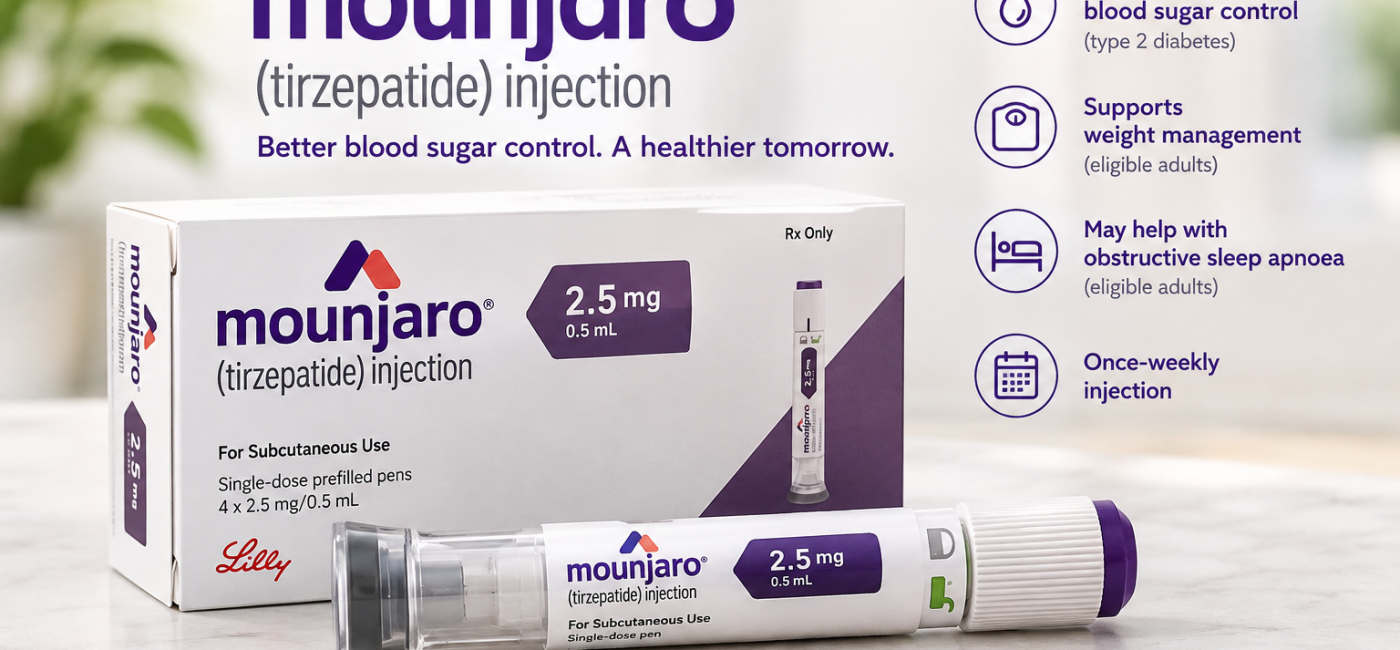
Mounjaro is a tirzepatide product available in Australia.
For eligible adults, Mounjaro can be used for chronic weight management alongside a reduced-calorie diet and increased physical activity.
It is also used in the treatment of type 2 diabetes.
What Is Semaglutide?
Semaglutide is a GLP-1 receptor agonist.
It acts primarily through the GLP-1 receptor, which is involved in glucose regulation and appetite control.
Different semaglutide products have different approved indications.
For example, Wegovy is specifically used for chronic weight management in eligible patients, while Ozempic is used for type 2 diabetes.
This distinction is important when comparing tirzepatide and semaglutide.
How Do Tirzepatide and Semaglutide Work?
The biggest biological difference is their receptor activity.
Tirzepatide
Tirzepatide activates both GIP and GLP-1 receptors.
These pathways can influence:
- Appetite
- Food intake
- Blood glucose
- Insulin secretion
- Glucagon secretion
- Gastric emptying
Semaglutide
Semaglutide primarily activates the GLP-1 receptor.
Its effects include:
- Increased glucose-dependent insulin secretion
- Reduced glucagon secretion
- Slower gastric emptying
- Reduced appetite
- Reduced food intake
Although the two medicines have overlapping effects, they are not pharmacologically identical.
Which Produces More Weight Loss?
This is one of the most important questions surrounding the two medicines.
Several clinical trials have demonstrated substantial weight loss with both tirzepatide and semaglutide.
However, comparing unrelated trials can be misleading because participants, treatment duration, doses and study designs can differ.
A more informative comparison comes from a head-to-head trial.
What Did the SURMOUNT-5 Trial Find?
SURMOUNT-5 directly compared tirzepatide with semaglutide in adults with obesity who did not have diabetes.
Participants receiving tirzepatide achieved greater average weight loss than those receiving semaglutide over the study period.
The result provides stronger comparative evidence than simply placing separate clinical trials side by side.
However, the study population and treatment conditions matter.
The results should not be interpreted as meaning that every person taking tirzepatide will lose more weight than every person taking semaglutide.
Individual results can be substantially different from trial averages.
What Did Earlier Semaglutide Studies Show?
Semaglutide has also demonstrated substantial weight loss in large clinical trials.
In the STEP 1 study, adults with overweight or obesity who received semaglutide 2.4 mg alongside lifestyle intervention experienced substantial average weight reduction over 68 weeks.
This established semaglutide as an effective treatment option for chronic weight management.
The existence of newer evidence favouring tirzepatide in a direct comparison does not mean semaglutide is ineffective.
Both medicines have demonstrated clinically meaningful benefits.
Why Might Tirzepatide Produce Greater Weight Loss?
One possible explanation is its dual GIP and GLP-1 activity.
Tirzepatide activates two incretin-related pathways rather than primarily targeting one.
However, the exact reasons for differences in clinical outcomes are more complex than simply counting receptor pathways.
Dose, pharmacology, patient characteristics, treatment adherence and other factors all influence results.
It is therefore more accurate to say that tirzepatide has demonstrated greater average weight loss in certain direct clinical comparisons than to claim that two receptor pathways automatically make it “twice as strong.”
Does Everyone Lose More Weight With Tirzepatide?
No.
Clinical trial results represent averages across groups.
An individual patient may:
- Lose substantially more than the average
- Lose less than the average
- Experience a plateau
- Respond differently after a dose increase
- Stop treatment because of side effects
- Have a different response because of other medical conditions or medicines
Treatment should therefore be assessed according to the individual rather than based solely on published percentages.
Tirzepatide vs Semaglutide Side Effects
Both medicines can cause gastrointestinal adverse effects.
Common effects include:
- Nausea
- Vomiting
- Diarrhoea
- Constipation
- Abdominal discomfort
- Reduced appetite
Side effects may be more noticeable when treatment starts or when the dose increases.
Not everyone experiences these effects, and their severity varies.
If symptoms are persistent, severe or interfering with hydration or normal activities, contact your healthcare professional.
Which Has Fewer Side Effects?
There is no universal answer.
Tirzepatide and semaglutide both have gastrointestinal side effects, and individual tolerance varies.
The most appropriate medicine is not necessarily the one with the lowest average rate of one particular symptom.
Your doctor may consider your previous experience with similar medicines, medical history, other treatments and treatment objectives.
Tirzepatide vs Semaglutide Dosing
The medicines have different dosing schedules and strengths.
They should not be converted on a milligram-for-milligram basis.
For example, 5 mg of tirzepatide does not equal 5 mg of semaglutide.
Both treatments generally begin with a lower dose and increase gradually when appropriate.
This gradual escalation helps healthcare professionals manage tolerability and allows the patient’s response to be assessed.
Never increase your dose because you believe a higher dose will automatically produce faster weight loss.
How Quickly Do They Work?
Neither medicine should be viewed as an instant weight-loss treatment.
Some people notice changes in appetite relatively early, but meaningful changes in body weight generally develop over weeks and months.
Treatment is usually increased gradually rather than starting immediately at a high maintenance dose.
This means that the first few weeks should not necessarily be used to judge the final effectiveness of treatment.
Tirzepatide vs Semaglutide for Appetite Control
Both medicines can reduce appetite.
This can make it easier for some people to reduce calorie intake without feeling as hungry as they did previously.
However, appetite reduction does not mean that nutritional requirements disappear.
A healthy weight-management plan should still provide adequate nutrition.
People taking these medicines may benefit from paying particular attention to protein intake, nutrient-dense foods, hydration and overall meal quality.
Tirzepatide vs Semaglutide for Type 2 Diabetes
Both medicines have important roles in diabetes treatment, but the specific product matters.
Mounjaro contains tirzepatide and is approved in Australia for adults with type 2 diabetes.
Ozempic contains semaglutide and is also used for type 2 diabetes.
Wegovy contains semaglutide but has a different approved role in chronic weight management.
Patients should therefore compare the actual medicines and indications rather than treating all products containing the same active ingredient as identical.
Tirzepatide vs Semaglutide for Obesity
For eligible adults with obesity, both medicines can be considered as part of a comprehensive treatment plan.
Treatment may involve:
- Medical assessment
- Nutrition
- Physical activity
- Behavioural support
- Medication
- Monitoring
- Management of obesity-related conditions
Medication should be viewed as one component of long-term care rather than a replacement for healthy lifestyle measures.
What Happens When You Stop Treatment?
Stopping treatment can result in weight regain.
This has been observed with both tirzepatide and semaglutide.
Obesity is a chronic condition for many people, and biological mechanisms that promote weight regain can remain after weight has been lost.
For this reason, stopping treatment should be discussed with your healthcare professional.
Do not discontinue prescription treatment solely because you have reached a particular number on the scales.
Can You Switch From Semaglutide to Tirzepatide?
Some patients may be able to switch.
However, the decision should be made with a healthcare professional.
Your prescriber may consider:
- Current semaglutide dose
- Treatment duration
- Weight response
- Side effects
- Blood glucose levels
- Other medicines
- Medical history
- Treatment goals
There is no universal dose conversion between semaglutide and tirzepatide.
Can You Take Tirzepatide and Semaglutide Together?
Do not combine tirzepatide and semaglutide unless specifically directed by a qualified healthcare professional.
There is no general recommendation for patients to use both medicines simultaneously for weight loss.
If one medicine is not producing the desired response, discuss alternative treatment options with your healthcare professional.
Which Is Better for Long-Term Weight Management?
Both medicines can form part of long-term medical weight management for appropriate patients.
The best choice depends on more than average weight loss.
Important considerations include:
- Effectiveness
- Side effects
- Medical history
- Other medicines
- Diabetes status
- Treatment goals
- Accessibility
- Cost
- Long-term adherence
- Personal preference
A treatment that produces strong results but cannot be tolerated or maintained may not be the best option for a particular patient.
Tirzepatide vs Semaglutide and Exercise
Exercise remains valuable regardless of which medication is used.
Physical activity can help support:
- Cardiovascular health
- Muscle strength
- Fitness
- Blood glucose control
- Weight maintenance
- Overall wellbeing
Resistance training can be particularly useful during weight loss because maintaining muscle mass is an important part of healthy body composition.
Australian adult guidelines recommend working toward 150–300 minutes of moderate-intensity physical activity each week, or 75–150 minutes of vigorous activity, together with muscle-strengthening activity on at least two days each week.
Your healthcare professional can help determine an appropriate activity level.
Tirzepatide vs Semaglutide and Diet
Neither medication replaces a balanced diet.
A useful approach is to focus on nutrient-dense foods and sustainable habits rather than highly restrictive diets.
Depending on your individual needs, meals may include:
- Lean protein
- Vegetables
- Fruit
- Whole grains
- Legumes
- Healthy fats
- Adequate fluids
Large meals may be harder to tolerate for some people taking incretin-based medicines.
If nausea or other gastrointestinal symptoms are significant, discuss dietary changes with your healthcare professional.
Important Safety Information
Tirzepatide and semaglutide are prescription medicines and are not suitable for everyone.
Potential concerns can include gastrointestinal adverse effects, dehydration, hypoglycaemia when combined with certain diabetes medicines and other clinically important adverse effects.
The Australian TGA has also issued a 2026 safety update concerning the rare eye disorder non-arteritic anterior ischaemic optic neuropathy (NAION) in the GLP-1 receptor agonist class.
Sudden vision loss or a rapid change in vision requires urgent medical assessment.
Always use the current Australian Product Information and Consumer Medicine Information for the medicine prescribed to you.
Frequently Asked Questions
Is tirzepatide better than semaglutide for weight loss?
Direct clinical evidence indicates that tirzepatide produced greater average weight loss than semaglutide in a head-to-head trial involving adults with obesity without diabetes. This does not mean every individual will have a better response to tirzepatide.
What is the difference between tirzepatide and semaglutide?
Tirzepatide activates GIP and GLP-1 receptors, while semaglutide primarily activates the GLP-1 receptor.
Is Mounjaro tirzepatide?
Yes. Mounjaro contains tirzepatide.
Is Wegovy semaglutide?
Yes. Wegovy contains semaglutide and is used for chronic weight management in eligible patients.
Is Ozempic semaglutide?
Yes. Ozempic contains semaglutide and is used for type 2 diabetes.
Can you switch from semaglutide to tirzepatide?
Some patients can switch under medical supervision. There is no simple milligram-for-milligram conversion.
Can you take tirzepatide and semaglutide together?
Do not combine them unless specifically instructed by your healthcare professional.
Which has fewer side effects?
Both can cause gastrointestinal side effects. Individual tolerability varies, so there is no universal winner.
Do you regain weight after stopping tirzepatide or semaglutide?
Weight regain can occur after discontinuing either treatment. Long-term management should therefore be discussed with a healthcare professional.
The Bottom Line
Tirzepatide and semaglutide are both evidence-based medicines used in modern metabolic and weight-management care.
Tirzepatide acts through both GIP and GLP-1 pathways, while semaglutide primarily acts through GLP-1.
Both can produce substantial weight loss in appropriate patients. Direct comparative evidence has shown greater average weight reduction with tirzepatide in certain populations, but clinical averages do not determine what will happen to an individual patient.
The appropriate treatment should be selected with a healthcare professional based on your medical history, treatment goals, other medicines, tolerability and long-term needs.
This article is for general educational purposes and does not replace the current Australian Product Information, Consumer Medicine Information or personalised medical advice.