

Mounjaro vs Ozempic: What’s the Difference and Which Is Better? Onlinepharmaustralia Mounjaro and Ozempic are two prescription medicines used in the management of type 2 diabetes, but they are not the same medicine.
Mounjaro contains tirzepatide, while Ozempic contains semaglutide. They work through different hormonal pathways and have different approved uses, dosing schedules and clinical evidence.
Both medicines can affect appetite, food intake and blood glucose. Mounjaro is also approved in Australia for chronic weight management in eligible adults, while Ozempic is approved for the treatment of adults with type 2 diabetes.
So which is better: Mounjaro or Ozempic?
There is no universal answer. The appropriate treatment depends on your medical history, treatment goals, other medicines, tolerability and advice from your healthcare professional.
Mounjaro vs Ozempic at a Glance
| Feature | Mounjaro | Ozempic |
|---|---|---|
| Active ingredient | Tirzepatide | Semaglutide |
| Drug class | Dual GIP/GLP-1 receptor agonist | GLP-1 receptor agonist |
| Main approved diabetes use | Type 2 diabetes | Type 2 diabetes |
| Australian weight-management indication | Yes, for eligible adults | Ozempic is not the semaglutide product indicated specifically for chronic weight management |
| Administration | Once weekly | Once weekly |
| Main effect | Blood glucose control, appetite and body-weight reduction | Blood glucose control, appetite and body-weight reduction |
| Common side effects | Gastrointestinal symptoms are common | Gastrointestinal symptoms are common |
Always check the current Australian Product Information because indications, presentations and safety information can change.
What Is Mounjaro?
Mounjaro contains tirzepatide.
Tirzepatide is a long-acting dual GIP and GLP-1 receptor agonist. It acts on two hormone pathways involved in glucose regulation, appetite and metabolism.
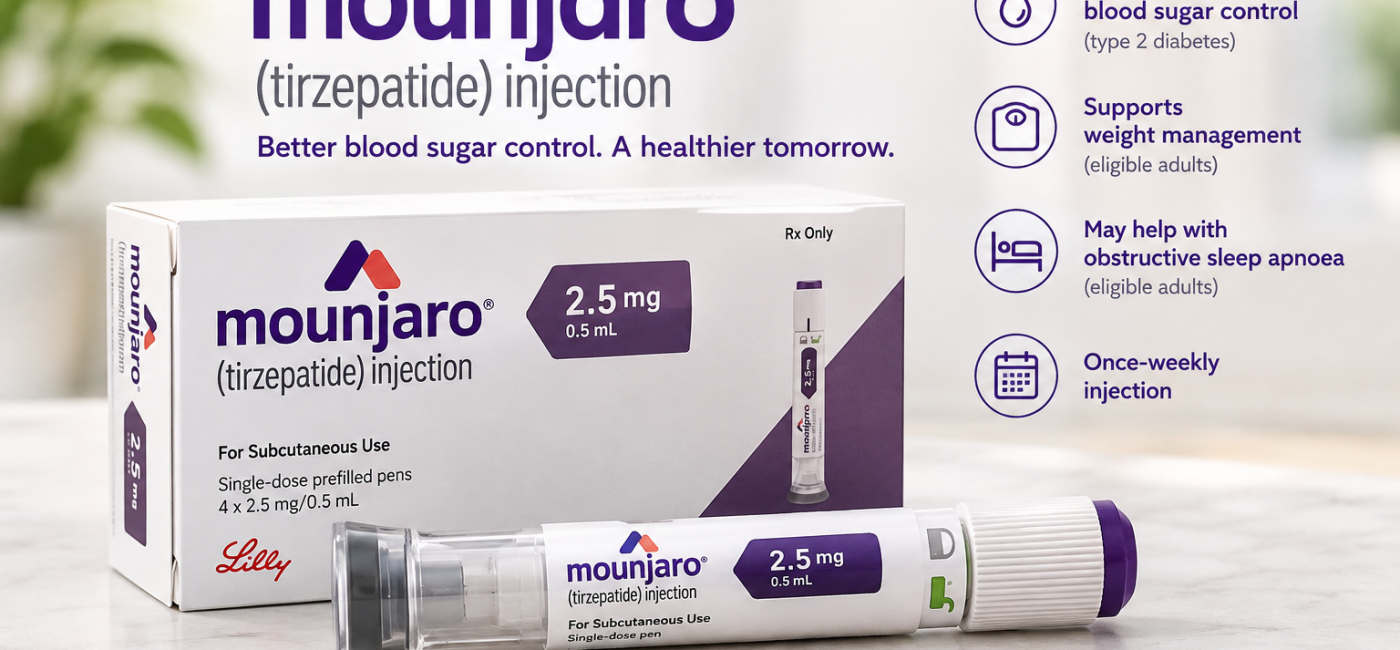
In Australia, Mounjaro is approved for adults with type 2 diabetes and for chronic weight management in eligible adults. It also has an Australian indication for moderate to severe obstructive sleep apnoea in adults with obesity.
Mounjaro is administered once weekly.
What Is Ozempic?
Ozempic contains semaglutide.
Semaglutide is a GLP-1 receptor agonist. It acts primarily through the GLP-1 receptor pathway.
Ozempic is used in Australia for adults with type 2 diabetes. It is important not to confuse Ozempic with Wegovy: both contain semaglutide, but they are different products with different approved indications and presentations.
The TGA lists Ozempic as a semaglutide prescription medicine marketed in Australia.
What Is the Main Difference Between Mounjaro and Ozempic?
The most important pharmacological difference is the number of hormone pathways targeted.
Mounjaro targets GIP and GLP-1
Tirzepatide activates:
- GIP receptors
- GLP-1 receptors
Ozempic targets GLP-1
Semaglutide primarily activates:
- GLP-1 receptors
Both pathways are involved in regulating blood glucose and appetite, but their pharmacology is different.
This is why you should not treat Mounjaro and Ozempic as interchangeable medicines.
Mounjaro vs Ozempic for Weight Loss
Both tirzepatide and semaglutide can produce weight loss.
However, the evidence needs to be interpreted carefully.
Mounjaro has an Australian indication for chronic weight management in eligible adults alongside a reduced-calorie diet and increased physical activity.
Ozempic, by contrast, is primarily an Australian type 2 diabetes product rather than the semaglutide product specifically approved for chronic weight management.
For eligible patients seeking semaglutide specifically for chronic weight management, Wegovy is the relevant semaglutide product to discuss with a healthcare professional.
This distinction is important when researching “Mounjaro vs Ozempic for weight loss.”
Which Causes More Weight Loss: Mounjaro or Ozempic?
It is difficult to make a direct comparison using trials that were not designed to compare the two medicines under identical conditions.
Clinical studies of tirzepatide have demonstrated substantial average weight reduction, while semaglutide has also demonstrated significant weight-loss effects.
However, Ozempic and Mounjaro have different approved indications and doses.
For that reason, patients should not assume that a result from a particular Mounjaro study can be directly compared with a result from an Ozempic diabetes trial.
If your primary goal is chronic weight management, your healthcare professional can discuss the medicines specifically approved for that purpose.
Mounjaro vs Ozempic for Type 2 Diabetes
Both medicines have an important role in type 2 diabetes treatment.
Mounjaro is approved in Australia for adults with insufficiently controlled type 2 diabetes. Ozempic is also an approved treatment for adults with type 2 diabetes.
Your healthcare professional may consider:
- Your current blood glucose levels
- HbA1c
- Other diabetes medicines
- Kidney and cardiovascular considerations
- Body weight
- Side effects
- Treatment goals
- Other medical conditions
Do not change diabetes medication without medical supervision.
How Do Mounjaro and Ozempic Work?
Both medicines influence hormonal pathways involved in glucose regulation and appetite.
Mounjaro
Tirzepatide activates GIP and GLP-1 receptors.
This can:
- Improve glucose-dependent insulin secretion
- Reduce glucagon secretion
- Slow gastric emptying
- Reduce food intake
- Influence appetite
- Support body-weight reduction
Ozempic
Semaglutide acts through the GLP-1 receptor pathway.
GLP-1 receptor activation can:
- Increase glucose-dependent insulin secretion
- Reduce glucagon secretion
- Slow gastric emptying
- Reduce appetite
- Reduce food intake
The effects and individual responses can vary.
Mounjaro vs Ozempic Dosing
Both medicines are administered once weekly, but their dosing schedules are different.
Mounjaro treatment generally begins at a low dose before gradually increasing when appropriate.
The Australian Mounjaro CMI states that the usual starting dose is 2.5 mg once weekly for four weeks, followed by 5 mg once weekly. Further increases of 2.5 mg can be considered after at least four weeks on the current dose, up to a maximum of 15 mg once weekly.
Ozempic has its own dosing schedule.
The milligram amounts should not be compared directly.
For example, 5 mg of tirzepatide is not equivalent to 5 mg of semaglutide.
Mounjaro vs Ozempic Side Effects
Both medicines can cause gastrointestinal side effects.
Common effects may include:
- Nausea
- Vomiting
- Diarrhoea
- Constipation
- Abdominal discomfort
- Reduced appetite
These effects can be more noticeable when treatment begins or when the dose is increased.
Not everyone experiences the same side effects.
If symptoms are severe, persistent or concerning, contact your healthcare professional.
Can Mounjaro and Ozempic Cause Low Blood Sugar?
Mounjaro and Ozempic can affect blood glucose, but the risk of hypoglycaemia depends partly on what other medicines you take.
The risk can be higher when these medicines are used with insulin or certain medicines called sulfonylureas.
If you take diabetes medication, ask your healthcare professional how your medicines should be managed.
Do not change insulin or other diabetes medication doses yourself.
Can You Take Mounjaro and Ozempic Together?
Mounjaro and Ozempic should not be combined unless specifically directed by an appropriately qualified healthcare professional.
There is no general recommendation for patients to use both medicines together.
If your current treatment is not producing the expected result, speak with your doctor about whether another treatment may be more appropriate.
Do not add Ozempic to Mounjaro or switch between the two without medical guidance.
Can You Switch From Ozempic to Mounjaro?
Some patients may be able to switch from Ozempic to Mounjaro, but the decision should be made with a healthcare professional.
There is no simple milligram-for-milligram conversion between semaglutide and tirzepatide.
Your prescriber may consider:
- Your current Ozempic dose
- How long you have used it
- Your blood glucose control
- Your weight response
- Side effects
- Other medicines
- Your medical history
- Your treatment objectives
The transition plan should be individualised.
Can You Switch From Mounjaro to Ozempic?
A switch may be appropriate for some patients, but it should be medically supervised.
Your healthcare professional may need to determine when the next medicine should be started and what dose is appropriate.
Do not take both medicines simultaneously unless your prescriber specifically instructs you to do so.
Mounjaro vs Ozempic and Appetite
Both medicines can reduce appetite.
This can contribute to lower food intake and, in appropriate patients, weight reduction.
However, reduced appetite does not mean that nutritional needs disappear.
People taking either medicine should still aim for an appropriate, balanced eating pattern.
Adequate protein, vegetables, fruit, whole grains, healthy fats and fluids can be important components of a healthy diet, depending on individual needs.
Mounjaro vs Ozempic and Exercise
Medication should generally be viewed as one component of a broader treatment plan.
Physical activity can support:
- Cardiovascular health
- Blood glucose control
- Muscle strength
- Fitness
- Weight management
- Long-term health
If you are taking Mounjaro or Ozempic and experiencing significant vomiting, diarrhoea, dizziness or weakness, speak with your healthcare professional about whether your activity should be temporarily modified.
Mounjaro and Ozempic Before Surgery
This is an important issue for anyone taking either medicine.
GLP-1 receptor agonists and dual GIP/GLP-1 receptor agonists can delay gastric emptying.
The TGA has warned that this may create a risk during general anaesthesia or deep sedation because stomach contents may remain present despite standard fasting.
If you are taking Mounjaro or Ozempic and are scheduled for surgery or a procedure involving anaesthesia or deep sedation, tell your doctor, surgeon and anaesthetist that you are taking the medicine.
Do not stop your medicine independently unless instructed by your healthcare team.
Mounjaro, Ozempic and Vision Changes
The TGA issued a 2026 class-wide safety update concerning a rare but serious eye disorder called non-arteritic anterior ischaemic optic neuropathy (NAION).
The update applies to the GLP-1 receptor agonist class and includes Ozempic, Wegovy and Mounjaro among the medicines marketed in Australia.
Sudden vision loss, including partial loss of vision, requires urgent medical assessment.
This is an important reason to keep your medication information current rather than relying solely on older online articles.
Which Is Better: Mounjaro or Ozempic?
There is no universal answer.
For type 2 diabetes, both medicines can be considered depending on the individual’s circumstances.
For chronic weight management, Mounjaro has a specific Australian indication for eligible adults, while Ozempic is not the semaglutide product specifically indicated for chronic weight management in Australia.
The best treatment depends on factors such as:
- Your diagnosis
- Your weight-management goals
- Blood glucose control
- Other medicines
- Side-effect tolerance
- Medical history
- Treatment response
- Your healthcare professional’s assessment
A medicine should be selected based on clinical suitability rather than simply choosing whichever has generated more attention online.
Frequently Asked Questions
Is Mounjaro the same as Ozempic?
No. Mounjaro contains tirzepatide, while Ozempic contains semaglutide. Tirzepatide activates both GIP and GLP-1 receptors, whereas semaglutide acts primarily through the GLP-1 receptor.
Is Mounjaro stronger than Ozempic?
The medicines are not directly interchangeable, so describing one as simply “stronger” can be misleading. Clinical studies have demonstrated substantial effects with both, but their indications, doses and study designs differ.
Which is better for weight loss, Mounjaro or Ozempic?
Mounjaro has an Australian indication for chronic weight management in eligible adults. Ozempic is indicated for type 2 diabetes rather than specifically for chronic weight management. Your healthcare professional can determine which treatment is appropriate.
Can I take Mounjaro and Ozempic together?
Do not combine them unless specifically instructed by your healthcare professional.
Can I switch from Ozempic to Mounjaro?
Some patients may be able to switch, but the transition should be medically supervised. There is no simple dose-for-dose conversion.
Does Mounjaro contain semaglutide?
No. Mounjaro contains tirzepatide. Ozempic contains semaglutide.
Does Ozempic contain tirzepatide?
No. Ozempic contains semaglutide.
Which has more side effects?
Both medicines can cause gastrointestinal side effects. Individual tolerability varies, so there is no universal answer.
Can I use Mounjaro for diabetes?
Yes. Mounjaro is approved in Australia for the treatment of adults with type 2 diabetes.
Can I use Ozempic for weight loss?
Ozempic is an Australian prescription medicine indicated for type 2 diabetes. Patients seeking semaglutide specifically for chronic weight management should discuss the appropriate approved product with their healthcare professional.
The Bottom Line
Mounjaro and Ozempic are both important prescription medicines, but they are not the same treatment.
Mounjaro contains tirzepatide and acts on both GIP and GLP-1 receptors. Ozempic contains semaglutide and acts primarily through the GLP-1 receptor.
Both can help manage type 2 diabetes in appropriate patients, while Mounjaro also has an Australian indication for chronic weight management in eligible adults.
The right choice depends on your individual health circumstances rather than a simple comparison of brand names or milligram doses.
If you are considering starting, stopping or switching between Mounjaro and Ozempic, speak with your doctor or pharmacist for personalised advice.
This article is for educational purposes only and does not replace the current Australian Product Information, Consumer Medicine Information or personalised medical advice.