

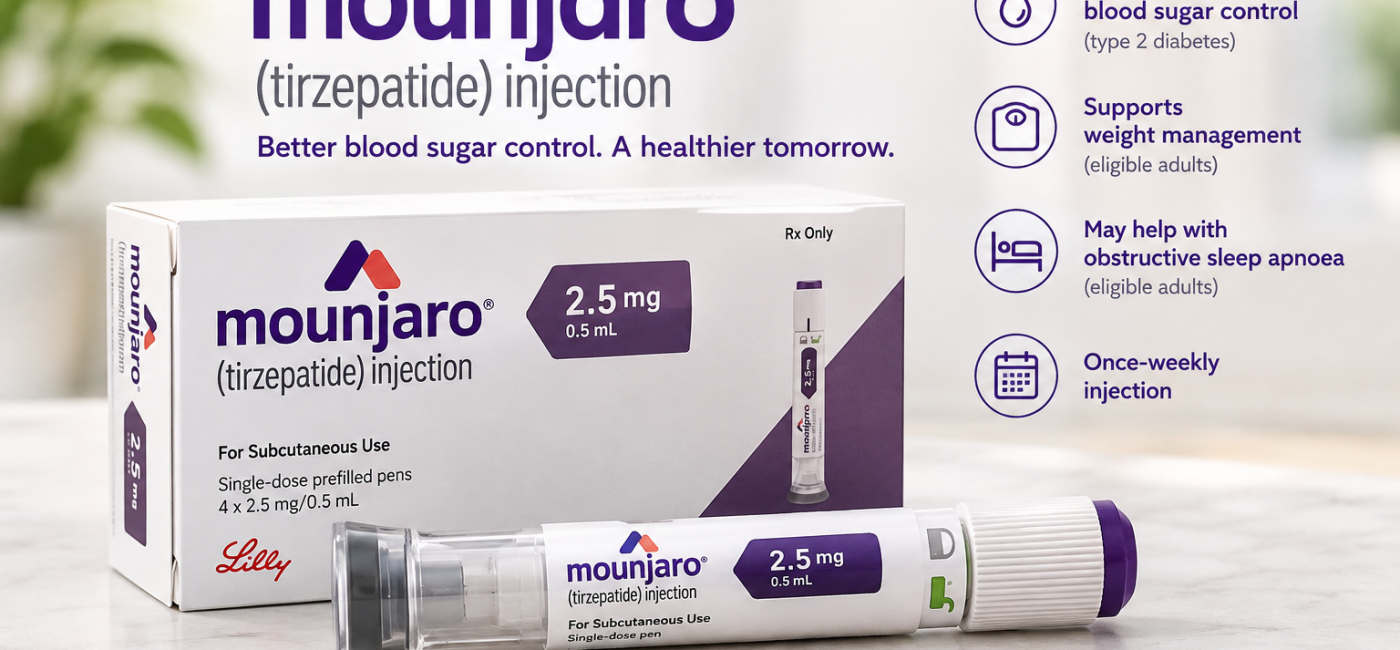
If you have been prescribed Mounjaro (tirzepatide) Onlinepharmaustralia, one of the first questions you may have is: how long does Mounjaro take to work?
The answer depends on what you mean by “work.” Tirzepatide begins acting in the body after a dose, but noticeable changes in appetite, blood glucose or body weight do not necessarily happen at the same time. Your response can also vary depending on your prescribed dose, medical condition, diet, activity level and individual response to treatment.
In Australia, Mounjaro is a prescription medicine containing tirzepatide. It is used in adults with type 2 diabetes to improve blood glucose control and, in appropriate adults, for chronic weight management alongside a reduced-calorie diet and increased physical activity. It is administered once weekly.
How quickly does Mounjaro start working?
Mounjaro starts acting after you take a dose, but it is important to distinguish the medicine beginning to act from seeing noticeable results.
Tirzepatide reaches maximum blood concentrations approximately 8 to 72 hours after administration. With once-weekly use, steady-state exposure is reached after about four weeks. Its mean elimination half-life is approximately five days, which helps explain why it is administered once a week.
You may therefore experience some effects during the first few days or weeks, but that does not mean you should expect a dramatic change immediately.
A simple way to think about the timeline
First few days: Mounjaro begins acting in the body after the injection.
First 1–4 weeks: Your body is adjusting to treatment. Some people notice changes in appetite or blood glucose, while others notice relatively little initially.
Around four weeks: Steady-state exposure is reached with once-weekly administration. The prescribed dose may also change after the initial four-week period.
Following months: Weight-management results may become increasingly noticeable as treatment continues and the dose is adjusted by the prescriber when appropriate.
There is no single timeline that applies to everyone.
How long does Mounjaro take to work for weight loss?
If you are using Mounjaro for chronic weight management, it is better to think about weight loss as a longer-term treatment process, rather than expecting a specific amount of weight loss during the first week.
Clinical trials have demonstrated substantial average weight reduction over many months of treatment. In the SURMOUNT-1 trial, adults with obesity or overweight plus a weight-related complication received once-weekly tirzepatide for 72 weeks, including a 20-week dose-escalation period. Average weight reductions at week 72 were 15.0% with 5 mg, 19.5% with 10 mg and 20.9% with 15 mg, compared with 3.1% with placebo.
These figures are clinical-trial averages, not a prediction of what an individual patient will lose.
Your results may be different.
What happens during the first month of Mounjaro?
The Australian Consumer Medicine Information states that the starting dose of Mounjaro KwikPen is 2.5 mg once weekly for four weeks. After four weeks, the dose is increased to 5 mg once weekly. If needed, a doctor may subsequently increase the dose in 2.5 mg increments after at least four weeks on the current dose. The maximum dose is 15 mg once weekly.
The initial period is therefore partly about allowing your body to adjust to treatment.
You should not increase your Mounjaro dose yourself because you want faster weight loss. Dose changes should be made according to your prescriber’s instructions.
Week 1
During the first week, Mounjaro has already begun acting in the body.
Some people may notice changes in appetite or eating patterns relatively early. Others may not notice a major difference.
It is important not to judge the entire treatment by what happens during the first seven days.
Weeks 2–4
Your body continues adapting to the medicine.
Some people begin noticing more noticeable changes in appetite or food intake during this period. Others may experience gastrointestinal effects such as nausea, diarrhoea, vomiting or constipation.
The Australian medicine information advises patients to speak with their doctor or pharmacist if they are concerned about using Mounjaro.
After four weeks
After four weeks, the standard Australian dosing schedule moves from the 2.5 mg starting dose to 5 mg once weekly, unless your healthcare professional advises otherwise. Further dose adjustments may be considered when clinically appropriate.
This means that the first month should not necessarily be viewed as the final indication of how you will respond to treatment.
Why don’t I notice weight loss immediately?
There are several reasons.
1. The starting dose is an adjustment dose
Mounjaro treatment begins at 2.5 mg once weekly. This is followed by a gradual dose-escalation schedule when appropriate.
Therefore, someone who sees little change during the first few weeks should not automatically assume that treatment will not work.
2. Weight loss is not instantaneous
Body weight naturally fluctuates from day to day because of factors such as hydration, food intake, bowel movements and other physiological changes.
Looking at a longer trend is usually more informative than comparing one day’s weight with another.
3. Individual responses differ
Clinical-trial averages describe groups of people. They cannot tell you exactly how your body will respond.
Some people lose weight relatively quickly. Others experience a slower change.
4. Lifestyle factors remain important
For chronic weight management, Mounjaro is used alongside a reduced-calorie diet and increased physical activity.
Treatment should therefore be considered as part of an overall medical weight-management plan rather than as a replacement for healthy lifestyle measures.
How does Mounjaro work?
Mounjaro contains tirzepatide, a medicine that acts on both the glucose-dependent insulinotropic polypeptide (GIP) and glucagon-like peptide-1 (GLP-1) receptor pathways.
These pathways are involved in appetite regulation, glucose metabolism and digestion.
For weight management, Mounjaro can help reduce appetite and food intake. It also slows the rate at which food leaves the stomach.
Because several physiological processes are involved, the effects of treatment are not limited to a simple “fat-burning” mechanism.
How long does Mounjaro take to reduce appetite?
Appetite changes can occur relatively early, but there is no guaranteed day or week when every patient will notice them.
Some people report feeling less hungry during the first weeks, while others experience a more gradual change.
The important point is that not feeling dramatically different after the first injection does not necessarily mean Mounjaro is not working.
Your healthcare professional can assess your response over time and determine whether the current treatment plan remains appropriate.
How long does Mounjaro take to lower blood sugar?
For people using Mounjaro for type 2 diabetes, glucose-lowering effects can begin after treatment starts.
However, blood glucose management should be assessed using appropriate measurements rather than symptoms alone.
Mounjaro is approved in Australia for adults with type 2 diabetes as part of an appropriate treatment plan.
If you use other diabetes medicines, particularly medicines that can cause hypoglycaemia, your healthcare professional may need to consider the overall treatment regimen.
Does a higher Mounjaro dose work faster?
Not necessarily.
The Australian dosing schedule is designed around gradual dose escalation. The starting dose is 2.5 mg once weekly, followed by 5 mg after four weeks, with further increases considered in 2.5 mg increments after a minimum of four weeks on the current dose when appropriate.
You should never increase your dose simply because you want faster weight loss.
A higher dose can also increase the likelihood of adverse effects for some people.
Your prescriber should determine whether and when a dose adjustment is appropriate.
How much weight can you lose with Mounjaro?
There is no guaranteed amount.
In a 72-week randomized clinical trial of adults with obesity or overweight plus a weight-related complication, average weight reduction ranged from 15.0% to 20.9% among participants receiving 5 mg, 10 mg or 15 mg of tirzepatide, compared with 3.1% with placebo.
However, those results should not be interpreted as a promise of a particular result for an individual patient.
Your starting weight, health conditions, treatment dose, lifestyle, adherence and individual response can all influence your outcome.
When should you talk to your doctor if Mounjaro isn’t working?
There is no universal number of weeks after which Mounjaro should be considered ineffective.
If you have concerns about your progress, speak with your prescriber rather than changing your dose yourself.
Your healthcare professional can consider:
- your current dose
- how long you have been taking treatment
- your weight trend
- appetite and dietary changes
- blood glucose results where relevant
- side effects
- other medicines
- other medical conditions
- whether your treatment goals remain appropriate
This assessment is much more useful than judging treatment based on the first week alone.
What if I am losing weight very slowly?
Slow progress does not automatically mean that treatment has failed.
Weight loss can vary considerably between individuals, and day-to-day measurements can obscure longer-term trends.
Instead of focusing on a single weigh-in, consider discussing your overall progress with your healthcare professional.
A clinician may also look beyond the scale, including changes in waist circumference, metabolic health, blood glucose where relevant, appetite and other treatment goals.
What are the common side effects of Mounjaro?
Mounjaro can cause gastrointestinal side effects.
Australian medicine information lists effects including:
- nausea
- diarrhoea
- vomiting
- constipation
These effects can be particularly relevant during dose escalation.
If side effects are severe, persistent or concerning, speak with your doctor or pharmacist.
Do not change or stop prescribed treatment without discussing it with your healthcare professional.
Are there serious side effects I should know about?
Yes.
Mounjaro’s Australian medicine information contains important warnings and precautions. More serious adverse effects can occur, and patients should seek appropriate medical advice when concerning symptoms develop.
There is also an important recent Australian safety update concerning GLP-1 receptor agonists. In 2026, the TGA reported that product warnings across the class were updated regarding the rare eye disorder non-arteritic anterior ischaemic optic neuropathy (NAION), which can cause serious visual impairment. The TGA advises patients to seek urgent medical attention if they experience sudden vision loss, including partial loss of vision.
Always consult the current Consumer Medicine Information and your healthcare professional for the most up-to-date safety advice.
Does Mounjaro work immediately after the injection?
Mounjaro begins to act after administration, but “working” should not be confused with immediate visible weight loss.
Tirzepatide reaches maximum blood concentrations approximately 8–72 hours after administration, while steady-state exposure is reached after approximately four weeks of once-weekly dosing.
The physiological effects and eventual changes in body weight develop over a longer period.
Can I make Mounjaro work faster?
Do not try to accelerate treatment by taking extra doses or changing your prescribed schedule.
Mounjaro should be used exactly as directed by your healthcare professional.
Taking more than prescribed could increase the risk of adverse effects without guaranteeing faster or greater weight loss.
Instead, focus on following the treatment plan, maintaining appropriate nutrition and physical activity, and attending follow-up appointments.
Frequently Asked Questions
How long does Mounjaro take to work?
Mounjaro begins acting after a dose, but noticeable effects vary. Tirzepatide reaches maximum blood concentrations approximately 8–72 hours after administration, while steady-state exposure is reached after about four weeks of weekly dosing.
Does Mounjaro work in the first week?
It can begin acting during the first week, but not everyone will notice significant appetite or weight changes immediately. Early treatment is also part of the gradual dose-escalation process.
How long does Mounjaro take to work for weight loss?
Weight loss develops over time rather than immediately after the first injection. Clinical trials have demonstrated substantial average weight reduction over many months, but individual results vary.
Why am I not losing weight on Mounjaro after one month?
One month may be too early to judge your overall response. The initial 2.5 mg dose is followed by gradual dose escalation when clinically appropriate. Discuss your progress with your prescriber rather than changing the dose yourself.
How quickly does Mounjaro reduce appetite?
Some people notice appetite changes early, while others experience a more gradual effect. There is no guaranteed timeline for when appetite will change.
Does Mounjaro work better at higher doses?
Clinical trials have shown greater average weight reduction at higher maintenance doses, but this does not mean that every individual needs a higher dose or that increasing the dose will automatically produce faster results. Dose adjustments should be made by the prescribing healthcare professional.
How long should I take Mounjaro?
The appropriate duration depends on your medical circumstances and treatment goals. Mounjaro should be continued or discontinued according to your healthcare professional’s advice.
The Bottom Line
Mounjaro does not have one universal “time to work.”
Tirzepatide begins acting after administration, but noticeable appetite, blood glucose and weight changes can occur on different timelines. Steady-state exposure is reached after approximately four weeks of once-weekly administration, while meaningful weight-management results are evaluated over a much longer period.
If you have recently started Mounjaro and are not seeing dramatic changes immediately, that does not necessarily mean the treatment is ineffective.
Follow your prescribed dosing schedule, maintain the lifestyle measures recommended by your healthcare professional, and discuss your progress and any side effects during follow-up appointments.
Medical information sources
This article should be reviewed against the latest Australian Consumer Medicine Information and Product Information before publication.
Primary sources include:
- Therapeutic Goods Administration (TGA)
- Australian Commission on Safety and Quality in Health Care
- Mounjaro Australian Consumer Medicine Information
- Eli Lilly Australia
- Peer-reviewed clinical research
Medical disclaimer: This article provides general educational information and is not a substitute for individual medical advice, diagnosis or treatment. Speak with a qualified healthcare professional about whether treatment is appropriate for you.