

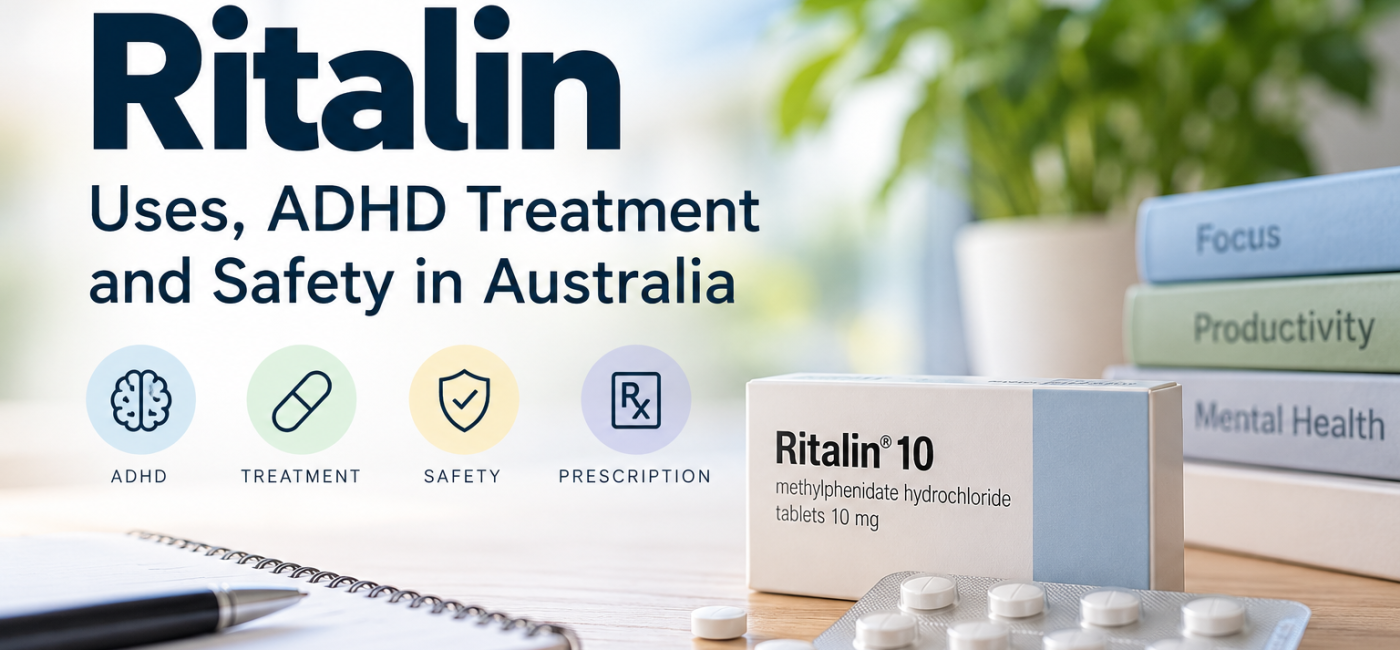
Buy Ritralin online in australia from Onlinepharmaustralia. Ritalin treatment for children Australia, If your child has been diagnosed with attention-deficit hyperactivity disorder (ADHD), you may have questions about medication, including Ritalin.
Ritalin contains methylphenidate, a stimulant medicine used as part of ADHD treatment. In Australia, methylphenidate medicines can be prescribed for children when a qualified specialist determines that medication is appropriate.
Ritalin treatment is not simply about giving a child medicine to improve concentration. Effective ADHD care usually involves an individual assessment, monitoring, family support and, where appropriate, psychological, educational and behavioural strategies.
This guide explains how Ritalin is used for children in Australia, what parents should know about treatment, potential side effects, monitoring, different methylphenidate formulations and when to speak with a healthcare professional.
What Is Ritalin?
Ritalin is a brand of medicine containing methylphenidate.
Methylphenidate is a stimulant medicine used to treat ADHD. Australian medicine information lists Ritalin 10 tablets and Ritalin LA capsules as medicines indicated for ADHD. Ritalin 10 also has an indication for narcolepsy.
Ritalin is a prescription medicine and is classified as a Schedule 8 controlled drug in Australia.
Methylphenidate is also available under several other brand names and formulations in Australia.
Is Ritalin Used to Treat ADHD in Children?
Yes.
Ritalin and other methylphenidate medicines may be used as part of ADHD treatment in children when clinically appropriate.
The Australian ADHD Clinical Practice Guideline recommends stimulant medicines, including methylphenidate, as medication options for children aged 6 years and older who are starting ADHD treatment, unless there are reasons they cannot use these medicines.
However, this does not mean every child with ADHD should automatically receive Ritalin.
The decision depends on the child’s symptoms, level of impairment, health history, treatment needs and discussion with the treating healthcare professional.
How Does Ritalin Help Children With ADHD?
Ritalin contains methylphenidate, which affects chemical signalling in the brain involving neurotransmitters such as dopamine and noradrenaline.
These chemical messengers are involved in areas such as attention, behaviour and impulse control.
When methylphenidate is effective for a child with ADHD, treatment may help with difficulties such as:
- Maintaining attention
- Controlling impulses
- Reducing hyperactive behaviour
- Completing tasks
- Participating in classroom activities
- Following instructions
- Managing everyday routines
The response is different for every child.
The goal is not simply to make a child quieter or more compliant. ADHD treatment should focus on reducing clinically significant symptoms and improving the child’s overall functioning and wellbeing.
When Is Ritalin Considered for Children?
A healthcare professional may consider ADHD medication when symptoms are causing meaningful difficulties in areas such as:
- School
- Home life
- Friendships
- Family relationships
- Emotional regulation
- Everyday activities
- Learning
- Organisation
The Australian ADHD Clinical Practice Guideline recommends considering the severity and impact of ADHD symptoms when determining treatment.
Medication is one possible component of care.
A child’s treatment plan may also involve behavioural, psychological, educational or family-based support.
Does Every Child With ADHD Need Ritalin?
No.
There is no single treatment that is appropriate for every child with ADHD.
Some children may benefit from medication, while others may need a different approach or a combination of treatments.
The decision should be made after an appropriate assessment and discussion with the child’s healthcare professional.
Parents should also have the opportunity to discuss the expected benefits, possible risks and alternatives before treatment begins.
Ritalin Treatment for Children Under 6
Treatment decisions for very young children require particular care.
The Australian ADHD Clinical Practice Guideline has specific recommendations for children under 6, and medication is not approached in the same way as treatment for older children.
For preschool-aged children, behavioural and environmental interventions may be particularly important.
If you are concerned about ADHD symptoms in a child under 6, speak with an appropriately qualified healthcare professional rather than trying to obtain ADHD medication independently.
Ritalin Treatment for Children Aged 6 and Older
For children aged 6 years and older, stimulant medication such as methylphenidate may be considered when ADHD symptoms are causing significant impairment.
The Australian ADHD guideline identifies methylphenidate as one of the stimulant medication options that may be considered.
The prescribing clinician will determine whether medication is appropriate and select a formulation and treatment approach based on the child’s individual circumstances.
Ritalin 10 vs Ritalin LA for Children
Parents may encounter different Ritalin formulations.
Ritalin 10
Ritalin 10 is an immediate-release methylphenidate tablet.
It is indicated for ADHD and is also indicated for narcolepsy.
Ritalin LA
Ritalin LA is a modified-release methylphenidate capsule used for ADHD.
The two formulations differ in how methylphenidate is released.
The choice between an immediate-release and modified-release medicine depends on factors such as the child’s daily routine, treatment response, duration of symptom control required and individual circumstances.
Parents should not switch between formulations without medical advice.
How Is the Ritalin Dose Chosen for a Child?
There is no universal Ritalin dose that is appropriate for every child.
The prescribing clinician determines the treatment regimen based on factors such as:
- Age
- Symptoms
- Treatment response
- Formulation
- Other medicines
- Medical history
- Side effects
- Individual treatment needs
Parents should never increase or decrease a child’s Ritalin dose without speaking with the prescribing healthcare professional.
A higher dose is not automatically better.
The goal is to find an effective treatment approach while keeping unwanted effects as low as reasonably possible.
How Long Does Ritalin Take to Work?
The timing of effects depends on the formulation used.
Immediate-release methylphenidate generally begins working sooner and lasts for a shorter period than modified-release formulations.
This is one reason doctors may choose different formulations depending on the child’s school day, activities and treatment requirements.
Parents should follow the specific instructions provided for their child’s medicine rather than assuming all methylphenidate products work in exactly the same way.
What Should Parents Expect When a Child Starts Ritalin?
Starting treatment is usually followed by a period of monitoring.
The healthcare professional may want to assess:
- ADHD symptoms
- School functioning
- Behaviour
- Appetite
- Sleep
- Height
- Weight
- Blood pressure
- Heart rate
- Mood
- Overall wellbeing
The purpose is to determine whether the medicine is helping and whether any unwanted effects are occurring.
Treatment may be adjusted depending on the child’s response.
Ritalin Side Effects in Children
Like all medicines, Ritalin can cause side effects.
Common stimulant-related effects can include:
- Reduced appetite
- Headache
- Stomach discomfort
- Difficulty sleeping
- Anxiety
- Irritability
- Increased blood pressure
Not every child experiences these effects.
Some side effects may improve as treatment is adjusted, but parents should tell the prescribing clinician about persistent or concerning symptoms.
Ritalin and Appetite in Children
Reduced appetite is an important issue to monitor in children taking stimulant medicines.
Some children may eat less during the day, which can affect their overall nutritional intake.
Parents can discuss strategies with their healthcare professional if appetite becomes a concern.
It is particularly important to monitor a child’s:
- Appetite
- Weight
- Growth
- Eating patterns
- General energy levels
Do not intentionally restrict a child’s food intake because Ritalin reduces appetite.
Ritalin and Child Growth
Growth monitoring is an important part of stimulant treatment in children.
Healthdirect notes that stimulant medicines may slow a child’s growth in height and recommends monitoring height and weight while children are taking these medicines.
Regular follow-up allows the healthcare professional to assess whether the child’s growth remains appropriate.
Parents should raise concerns if they notice significant changes in:
- Height
- Weight
- Appetite
- Eating behaviour
- General development
Ritalin and Sleep in Children
Sleep problems can occur with stimulant treatment.
Parents may notice:
- Difficulty falling asleep
- Later bedtime
- Reduced sleep duration
- Changes in sleep routine
Sleep is particularly important for children because inadequate sleep can affect mood, learning, behaviour and daytime functioning.
If Ritalin appears to be affecting your child’s sleep, speak with the prescribing clinician rather than changing the treatment schedule yourself.
Ritalin and Blood Pressure in Children
Stimulant medicines can affect cardiovascular measurements.
Healthcare professionals may therefore monitor:
- Blood pressure
- Heart rate
- Cardiovascular symptoms
Before treatment, your child’s clinician may also ask about personal and family medical history.
Tell the healthcare professional if your child has a known heart condition, significant cardiovascular symptoms, unexplained fainting or a relevant family history.
Seek urgent medical attention if your child develops serious symptoms such as chest pain, fainting or severe difficulty breathing.
Ritalin and Anxiety or Mood Changes
Some children may experience changes in mood, anxiety or irritability while taking stimulant medication.
A child’s behaviour can also be affected by many factors, including school stress, sleep, family circumstances and ADHD symptoms themselves.
If you notice a significant change after starting Ritalin, tell the child’s healthcare professional.
Do not assume that every behavioural change is caused by ADHD.
What If Ritalin Does Not Work for My Child?
Children can respond differently to stimulant medicines.
If Ritalin does not provide enough benefit or causes troublesome side effects, the treatment plan can be reviewed.
Depending on the circumstances, the clinician may consider:
- Adjusting the formulation
- Reviewing the dose
- Trying another stimulant
- Considering a non-stimulant medicine
- Adding psychological or behavioural support
- Reviewing the original diagnosis
- Assessing other conditions that may affect symptoms
The Australian ADHD Clinical Practice Guideline recognises that different medicines may be appropriate when an initial medication does not provide adequate benefit or causes problematic adverse effects.
Parents should not switch medicines independently.
Ritalin Treatment and School
One important goal of ADHD treatment is to support a child’s functioning across different environments.
For some children, this includes the classroom.
Parents can work with teachers and healthcare professionals to understand whether treatment is helping with:
- Attention
- Completing work
- Following instructions
- Classroom behaviour
- Organisation
- Social interaction
Medication should not be viewed as a substitute for appropriate educational support.
Schools may also be able to provide adjustments or other forms of support depending on the child’s needs.
Ritalin and Behavioural Support
Medication may be only one part of a child’s ADHD treatment plan.
Behavioural and psychological strategies can help children develop practical skills for:
- Organisation
- Task completion
- Emotional regulation
- Routines
- Social interaction
- Managing distractions
Parents can also work with healthcare professionals to develop consistent strategies at home.
A comprehensive approach can address areas that medication alone may not fully address.
How Parents Can Monitor Ritalin Treatment
Keeping simple records can help parents identify changes over time.
You may want to monitor:
Appetite
Has your child’s eating pattern changed?
Sleep
Is your child falling asleep normally?
School
Has concentration or classroom functioning changed?
Behaviour
Are ADHD symptoms improving?
Mood
Have you noticed unusual irritability, anxiety or mood changes?
Growth
Are height and weight being monitored during follow-up?
These observations can give the prescribing clinician useful information when reviewing treatment.
How Often Should a Child Be Reviewed?
The frequency of follow-up depends on the child’s individual treatment plan.
Reviews may be more frequent when medication is first started or when the treatment is being adjusted.
Once treatment is established, ongoing reviews remain important.
The Australian ADHD guideline recommends monitoring treatment effectiveness and adverse effects.
A child should not remain on stimulant medication indefinitely without appropriate clinical review. Ritalin treatment for children Australia
Can Ritalin Be Used Long Term in Children?
Some children may require ongoing ADHD treatment.
However, long-term treatment should be reviewed periodically.
The purpose of follow-up is to determine whether:
- The medication is still helping
- Side effects remain manageable
- The child’s circumstances have changed
- The formulation remains appropriate
- Non-medication support is still required
- The treatment should continue or be modified
The decision should be individualized.
Is Ritalin Safe for Children?
Ritalin can be an appropriate ADHD medicine for some children when prescribed and monitored by qualified healthcare professionals.
However, “safe” does not mean risk-free.
Potential concerns include:
- Appetite reduction
- Sleep problems
- Cardiovascular effects
- Mood changes
- Growth effects
- Medication misuse
This is why assessment, appropriate prescribing and regular monitoring are important.
Parents should never give a child another person’s Ritalin.
Can Parents Give Ritalin Without a Prescription?
No.
Ritalin is a prescription medicine in Australia and is classified as a Schedule 8 controlled drug.
ADHD medicines are tightly regulated, and prescribing requirements can vary between Australian states and territories.
Parents should obtain treatment through an appropriate healthcare professional and pharmacy pathway.
Never buy prescription stimulants from an unverified website or give a child medication prescribed for someone else.
What Happens If a Child Takes Too Much Ritalin?
Taking too much ADHD medicine can be dangerous.
If you think your child has taken too much Ritalin or another ADHD medicine, contact the Poisons Information Centre on 13 11 26 in Australia for advice. Healthdirect advises that you do not need to wait for symptoms to appear.
If your child is seriously unwell or has an emergency, call 000.
Keep medicines stored safely and out of reach of children.
Ritalin and Other Medicines
Tell the child’s doctor and pharmacist about all medicines, vitamins and supplements the child takes.
This includes:
- Prescription medicines
- Over-the-counter medicines
- Vitamins
- Herbal products
- Other ADHD medicines
Some medicines may interact with methylphenidate or require additional monitoring.
Never add another ADHD medicine without medical advice.
Can Ritalin Be Taken With Food?
The appropriate way to take Ritalin depends on the specific formulation.
Parents should follow the instructions supplied with their child’s medicine and ask their pharmacist if they are unsure.
For children experiencing reduced appetite, the timing of meals and medication may also be discussed with the healthcare professional.
Do not alter the formulation, crush modified-release products or change administration instructions unless the product information specifically allows it.
Ritalin Treatment for Children: A Typical Care Journey
Every child is different, but treatment may broadly involve:
Step 1: ADHD assessment
The child’s symptoms, development, health history and level of impairment are assessed.
Step 2: Discuss treatment options
The healthcare professional explains medication and non-medication approaches.
Step 3: Start treatment if appropriate
If methylphenidate is selected, the clinician chooses an appropriate formulation and treatment plan.
Step 4: Monitor response
Parents and clinicians observe changes in symptoms, behaviour, school functioning and side effects.
Step 5: Adjust treatment if necessary
The clinician may modify the treatment approach based on the child’s response.
Step 6: Continue regular review
Ongoing monitoring helps determine whether treatment remains appropriate.
Questions Parents Should Ask Before Starting Ritalin
Before your child begins treatment, consider asking:
- Why is methylphenidate being recommended?
- What symptoms are we trying to improve?
- Which formulation is being considered?
- What benefits should we expect?
- What side effects should we monitor?
- How will my child’s height and weight be monitored?
- Could Ritalin affect appetite?
- Could it affect sleep?
- How often will my child need follow-up?
- What should we do if the medicine does not seem to work?
- What alternatives are available?
- What non-medication support should we consider?
A good treatment decision should give parents an opportunity to understand both benefits and risks.
Frequently Asked Questions
What age can children take Ritalin in Australia?
Methylphenidate may be considered for children aged 6 years and older when clinically appropriate. Treatment decisions should be made by an appropriately qualified healthcare professional.
Is Ritalin used for ADHD in children?
Yes. Ritalin contains methylphenidate, which is used as part of ADHD treatment. Ritalin treatment for children Australia
Is Ritalin safe for children?
Ritalin can be appropriate for some children when properly prescribed and monitored. It can also cause side effects, so regular clinical review is important.
Does Ritalin affect children’s growth?
Stimulant medicines may affect growth in some children. Height and weight should therefore be monitored during treatment.
Does Ritalin reduce appetite in children?
Reduced appetite is a recognised side effect of stimulant medicines. Significant appetite changes should be discussed with the child’s healthcare professional.
Can Ritalin affect sleep?
Yes. Sleep difficulties can occur with stimulant medicines. Speak with the prescribing clinician if your child’s sleep changes after starting treatment. Ritalin treatment for children Australia
Is Ritalin available in Australia?
Yes. Ritalin and Ritalin LA are listed in Australian medicine information, and methylphenidate is available in several formulations.
Is Ritalin prescription-only in Australia?
Yes. Ritalin is a prescription medicine and is classified as a Schedule 8 controlled drug.
Can I give my child’s Ritalin to another child?
No. Prescription medicines should only be used by the person for whom they were prescribed.
What if Ritalin does not help my child?
Speak with the prescribing healthcare professional. The treatment may need to be reviewed, and another formulation, medicine or non-medication approach may be considered. Ritalin treatment for children Australia
Does a child need behavioural support if they take Ritalin?
Medication does not necessarily address every aspect of ADHD. Psychological, behavioural, educational and family-based support may form part of comprehensive treatment.
Ritalin Treatment for Children Australia: Key Takeaways
Ritalin is a methylphenidate medicine that may be used as part of ADHD treatment in children.
The important points for parents are:
- Ritalin contains methylphenidate.
- Methylphenidate is a stimulant ADHD medicine.
- It may be considered for children aged 6 years and older when clinically appropriate.
- Ritalin is prescription-only in Australia.
- Ritalin is classified as a Schedule 8 controlled drug.
- Treatment should be individualized.
- Appetite, sleep, growth, blood pressure and treatment response may need monitoring.
- Medication can be combined with psychological, behavioural and educational support.
- Parents should never change the dose without medical advice.
- Ritalin should never be shared with another child.
- If too much medicine is taken, contact the Poisons Information Centre on 13 11 26.
Discuss ADHD Treatment for Your Child
If you are concerned about your child’s attention, impulsivity, hyperactivity or school functioning, an appropriate assessment is an important first step.
If ADHD is diagnosed, your child’s healthcare professional can discuss whether medication such as methylphenidate is appropriate and explain the available treatment options. Ritalin treatment for children Australia
Speak with a qualified healthcare professional about your child’s ADHD symptoms and whether Ritalin or another treatment approach may be appropriate.
Medical Information Notice: This article is for general educational purposes and does not replace professional medical advice, diagnosis or treatment. Ritalin is a prescription medicine. Always follow your child’s healthcare professional’s instructions and the current Australian Product Information and Consumer Medicine Information.