

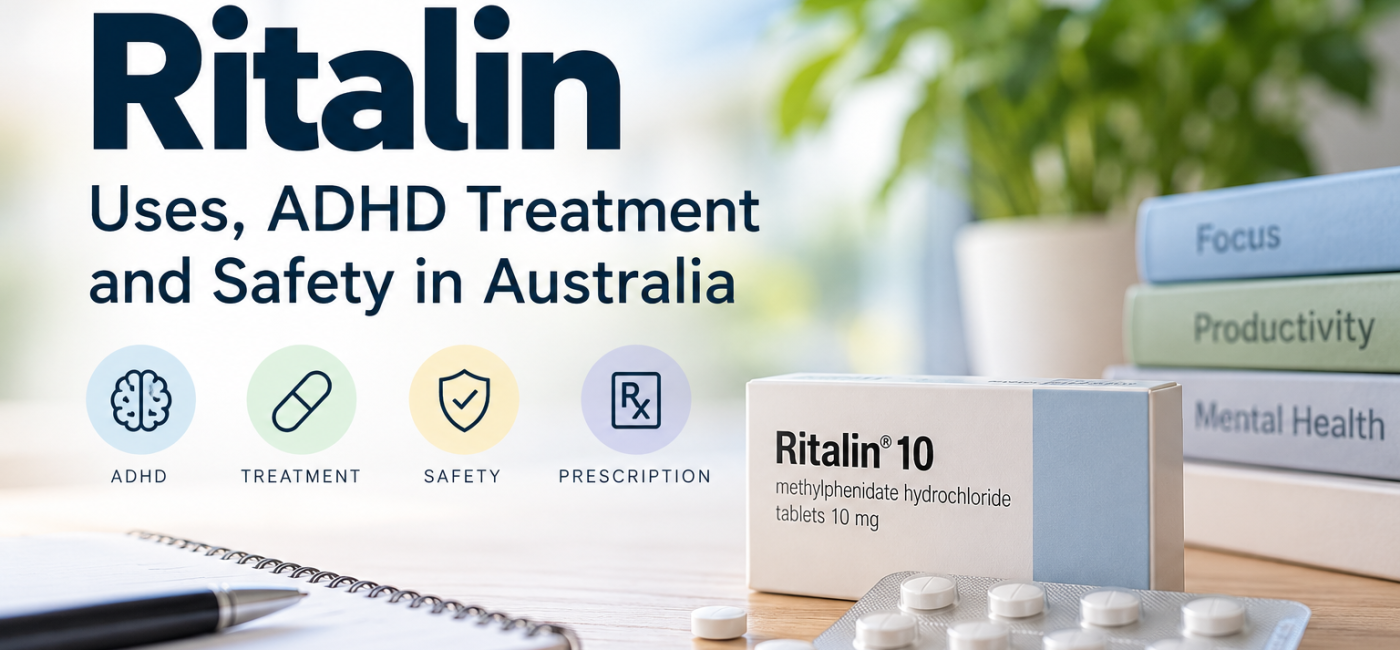
Buy Ritalin online in australia from Onlinepharmaustralia. Ritalin is one of the established medicines used in Australia as part of ADHD treatment. It contains the active ingredient methylphenidate, a central nervous system stimulant that can help reduce symptoms of attention-deficit hyperactivity disorder when prescribed appropriately.
In Australia, Ritalin is a prescription medicine and treatment should be based on an appropriate clinical assessment. Ritalin 10 tablets and Ritalin LA modified-release capsules are indicated for ADHD, while Ritalin 10 also has an indication for narcolepsy.
This guide explains how Ritalin fits into ADHD treatment in Australia, the difference between Ritalin 10 and Ritalin LA, how treatment is monitored, possible side effects, prescription requirements and questions to discuss with a healthcare professional.
What Is Ritalin?
Ritalin is a brand of medicine containing methylphenidate hydrochloride.
Methylphenidate is a stimulant medicine used in the treatment of ADHD. It is available in Australia under several brand names and formulations, including Ritalin, Ritalin LA and other methylphenidate products.
Ritalin is not an over-the-counter medicine. Australian medicine information identifies Ritalin as a Schedule 8 controlled drug, meaning prescription authorisation is required.
What Is Ritalin Used For?
Ritalin is primarily used as part of treatment for attention-deficit hyperactivity disorder (ADHD).
According to Australian medicine information, Ritalin 10 tablets and Ritalin LA capsules are indicated for ADHD. Ritalin 10 is also indicated for narcolepsy.
ADHD can affect areas such as:
- Attention and concentration
- Impulse control
- Organisation
- Activity levels
- Time management
- School or work performance
- Everyday functioning
Symptoms and their impact vary considerably between individuals. An ADHD diagnosis should therefore be based on an appropriate clinical assessment rather than on difficulty concentrating alone.
How Does Ritalin Work for ADHD?
Ritalin contains methylphenidate.
Methylphenidate affects neurotransmitter signalling in the brain, particularly pathways involving dopamine and noradrenaline. The Australian ADHD Clinical Practice Guideline recognises methylphenidate as one of the stimulant medicines used in ADHD treatment.
The exact response differs from person to person.
For some people with ADHD, appropriately prescribed methylphenidate can help improve attention and reduce certain ADHD symptoms.
Treatment should be monitored to determine whether the medicine provides meaningful benefit and whether side effects occur.
Ritalin as Part of ADHD Treatment
Medication is only one component of ADHD management.
The Australian ADHD Clinical Practice Guideline recommends that people with ADHD and their healthcare professionals make treatment decisions together. It also states that non-pharmacological interventions can improve broader aspects of functioning.
Depending on the individual, an ADHD treatment plan may include:
- Medication
- Psychological support
- Behavioural strategies
- Parent or family support
- Educational adjustments
- Workplace adjustments
- Cognitive behavioural interventions
- Organisational strategies
- Regular medical monitoring
For children and adolescents, parents, carers, schools and healthcare professionals may all have important roles in supporting treatment.
Is Ritalin a First-Line ADHD Treatment in Australia?
The Australian ADHD Clinical Practice Guideline recommends stimulant medicines, including methylphenidate, as first medication options for children aged 6 years and over, adolescents and adults starting ADHD treatment, unless there are reasons they cannot use these medicines.
The guideline also states that medication choice and dosage should be optimised for the individual.
This does not mean Ritalin is automatically the right medicine for every person with ADHD.
A clinician needs to consider the individual’s symptoms, health history, other medicines, potential side effects and treatment preferences.
Ritalin 10 vs Ritalin LA
One important consideration in Ritalin ADHD treatment is the formulation.
Ritalin 10
Ritalin 10 is an immediate-release tablet containing methylphenidate hydrochloride.
Australian medicine information lists Ritalin 10 for ADHD and narcolepsy.
Ritalin LA
Ritalin LA is a modified-release capsule formulation containing methylphenidate.
It is indicated for ADHD and is available in several strengths. Healthdirect identifies Ritalin LA as a Schedule 8 controlled drug requiring prescription authorisation.
The choice between immediate-release and modified-release methylphenidate should be made with the prescribing healthcare professional. Ritalin ADHD treatment Australia
What Is the Difference Between Immediate-Release and Modified-Release Ritalin?
The main difference is how the medicine releases methylphenidate.
Immediate-release formulations provide a shorter-acting form of treatment.
Modified-release formulations are designed to provide methylphenidate over a longer period.
The Australian ADHD guideline notes that the choice between short-acting and long-acting stimulant medication should be based on the person’s suitability and individual circumstances.
Factors that may influence the choice include:
- Daily routine
- Duration of symptom control needed
- School or work schedule
- Treatment response
- Side effects
- Convenience
- Individual preference
Who Can Receive Ritalin for ADHD in Australia?
Ritalin may be prescribed when a qualified healthcare professional determines that stimulant treatment is appropriate following an ADHD assessment.
The Australian ADHD Clinical Practice Guideline provides recommendations for children, adolescents and adults.
The guideline states that stimulant medicines including methylphenidate can be considered as first medication options for people aged 6 years and older who are starting ADHD treatment, unless they cannot take these medicines for health-related reasons.
The suitability of treatment must still be assessed individually.
Ritalin ADHD Treatment for Adults
ADHD can continue into adulthood, and adults may be diagnosed and treated for ADHD after experiencing symptoms for many years.
Adult ADHD treatment may focus on difficulties involving:
- Concentration
- Organisation
- Time management
- Impulsivity
- Work performance
- Household responsibilities
- Relationships
- Planning and completing tasks
Methylphenidate is one of the stimulant medicines that may be considered for adults with ADHD.
The Australian ADHD Clinical Practice Guideline reports evidence supporting methylphenidate and other stimulant medicines as ADHD treatment options for adults.
Ritalin ADHD Treatment for Children and Teenagers
Ritalin may also be prescribed to children and adolescents when clinically appropriate.
Treatment in younger patients requires careful monitoring because ADHD medication can affect areas such as:
- Appetite
- Sleep
- Weight
- Growth
- Blood pressure
- Heart rate
- Behaviour
- ADHD symptoms
Parents and carers should report significant changes to the treating healthcare professional.
The Australian ADHD guideline recommends ongoing monitoring to determine whether ADHD medication is effective and whether unwanted effects occur.
How Is Ritalin ADHD treatment in Australia Monitored?
Starting Ritalin is not the end of ADHD treatment.
Follow-up is important to determine whether the medicine is helping and whether unwanted effects are occurring.
Your healthcare professional may review:
- ADHD symptoms
- Daily functioning
- School or workplace performance
- Appetite
- Sleep
- Blood pressure
- Heart rate
- Weight
- Mood
- Other medicines
- Overall treatment response
The Australian ADHD Clinical Practice Guideline specifically recommends ongoing monitoring of effectiveness and unwanted effects.
How Is the Ritalin Dose Determined?
There is no single Ritalin dose that is appropriate for everyone.
The prescribing clinician determines the appropriate treatment based on the individual patient’s circumstances and the formulation being used.
The Australian ADHD guideline states that medication choice and dosage must be optimised for each person.
For this reason, patients should not increase, reduce or change their Ritalin dose without medical advice.
Ritalin Side Effects
Like other prescription medicines, methylphenidate can cause side effects.
Potential effects can include:
- Reduced appetite
- Difficulty sleeping
- Headache
- Stomach discomfort
- Nausea
- Increased heart rate
- Changes in blood pressure
- Nervousness
- Mood changes
The risk and severity of side effects differ between individuals.
If side effects are persistent, severe or interfering with daily life, speak with your doctor or pharmacist.
Ritalin ADHD treatment and Appetite
Reduced appetite can occur during methylphenidate treatment.
This is particularly relevant for children and adolescents because adequate nutrition and healthy growth are important.
If appetite decreases significantly, tell the treating healthcare professional.
Do not deliberately restrict food intake simply because Ritalin reduces your appetite.
Ritalin and Sleep
Sleep difficulties can occur with stimulant treatment.
If you notice that Ritalin is affecting your sleep, discuss the problem with your healthcare professional.
The clinician can assess whether the issue may relate to the medication, its timing, another medicine or another factor.
Do not change your treatment schedule independently.
Ritalin and Blood Pressure
Methylphenidate can affect cardiovascular measurements such as heart rate and blood pressure.
Your doctor may therefore consider your cardiovascular history before prescribing stimulant treatment and monitor relevant measurements during treatment.
Tell your doctor if you have:
- High blood pressure
- Heart disease
- A history of fainting
- Significant cardiovascular symptoms
- A family history of certain heart conditions
Seek urgent medical attention for serious symptoms such as chest pain, fainting or severe shortness of breath.
Ritalin and Mental Health
Your healthcare professional should know about your mental-health history before treatment.
This can include a history of:
- Severe anxiety
- Depression
- Psychotic symptoms
- Significant mood changes
- Other psychiatric conditions
If you develop significant changes in mood, behaviour or mental state after starting treatment, contact your healthcare professional promptly.
Ritalin and Other Medicines
Always tell your doctor and pharmacist about all medicines, supplements and other substances you use.
This is important because medicines can interact with one another.
Your healthcare professional can review your current medicines and determine whether methylphenidate is appropriate.
Do not assume that an over-the-counter medicine or supplement is automatically safe to combine with Ritalin.
Ritalin and Pregnancy
If you are pregnant, planning pregnancy or breastfeeding, discuss methylphenidate treatment with your doctor or pharmacist.
The TGA has previously updated methylphenidate product information with pregnancy safety information.
Do not stop prescribed medication without discussing the decision with your healthcare professional.
Is Ritalin Addictive?
Methylphenidate is a controlled stimulant medicine and should only be used by the person for whom it has been prescribed.
Using stimulant medication differently from the prescribed treatment plan can increase risks.
Ritalin should never be shared with friends, family members or anyone else.
Keep prescription medication stored appropriately and follow your pharmacist’s instructions.
Can You Buy Ritalin Without a Prescription in Australia?
Ritalin requires prescription authorisation in Australia. Healthdirect identifies Ritalin and Ritalin LA as Schedule 8 controlled medicines.
Patients should therefore obtain Ritalin through an appropriate healthcare and pharmacy pathway.
Be particularly cautious about websites that claim to sell prescription stimulants without a proper medical assessment or prescription.
Can You Get Ritalin Online in Australia?
Telehealth can form part of legitimate healthcare, but prescription ADHD medication still requires appropriate clinical assessment and prescribing.
A website offering Ritalin without appropriate medical oversight should be treated with caution.
A legitimate pathway should involve:
- Appropriate ADHD assessment
- Review of medical history
- Discussion of treatment options
- Prescription when clinically appropriate
- Dispensing through a lawful pharmacy
- Follow-up and monitoring
The objective should be safe, medically supervised treatment rather than simply obtaining medication.
Ritalin Treatment and Non-Medication Support
Medication does not necessarily address every aspect of ADHD.
The Australian ADHD Clinical Practice Guideline recommends considering non-pharmacological interventions as part of comprehensive ADHD care. These can include psychological interventions, family support and changes to school, university or workplace environments.
For adolescents and adults, cognitive behavioural interventions may also be offered.
A comprehensive treatment plan can therefore combine medication with practical strategies that address the individual’s daily challenges.
What If Ritalin Does Not Work Well Enough?
ADHD medication response varies.
If methylphenidate does not provide sufficient symptom improvement or produces troublesome side effects, the treatment plan may need to be reviewed.
The Australian ADHD guideline states that if one stimulant does not provide adequate improvement or causes side effects, another stimulant may be trialled where appropriate. Other medicines may also be considered when stimulant medicines are ineffective or unsuitable.
Do not switch medicines yourself.
A clinician should review your response before making treatment changes.
Ritalin vs Other ADHD Medicines
Ritalin is not the only medicine used for ADHD.
Methylphenidate is available in several formulations and brands in Australia, including:
- Ritalin
- Ritalin LA
- Concerta
- Other methylphenidate products
Other ADHD medicines include stimulant and non-stimulant options.
Healthdirect maintains a list of medicines containing methylphenidate in Australia.
The most appropriate treatment depends on the individual’s clinical circumstances rather than brand name alone.
Ritalin and Methylphenidate Shortages in Australia
Medicine supply can change over time.
The TGA has previously reported shortages affecting some modified-release methylphenidate products in Australia. Its current shortage information should be checked for the latest availability status rather than relying on older articles or social media posts.
If your usual methylphenidate product is unavailable, do not automatically substitute another formulation or strength.
Speak with your doctor or pharmacist about appropriate alternatives.
Questions to Ask Your Doctor About Ritalin
Before starting Ritalin treatment, useful questions include:
- Why is methylphenidate being recommended?
- Which formulation is appropriate for me?
- What benefits should I expect?
- What side effects should I monitor?
- How will my response be assessed?
- How often should I have follow-up appointments?
- Could Ritalin interact with my other medicines?
- Could it affect my sleep or appetite?
- What should I do if I miss a dose?
- What should I do if the medicine does not seem to work?
- Are there non-medication treatments I should consider?
Taking a list of questions to your appointment can make the discussion easier.
Frequently Asked Questions About Ritalin ADHD Treatment in Australia
What is Ritalin used for?
Ritalin contains methylphenidate and is used as part of ADHD treatment. Ritalin 10 is also indicated for narcolepsy.
Is Ritalin available in Australia?
Yes. Ritalin and Ritalin LA are listed in Australian medicine information, with methylphenidate available in several brands and formulations.
Is Ritalin prescription-only in Australia?
Yes. Ritalin is a prescription medicine and is classified as a Schedule 8 controlled drug.
Is Ritalin used for adult ADHD?
Methylphenidate is one of the stimulant medicines that may be used in adults with ADHD. Treatment should follow an appropriate assessment and individualised treatment plan.
Is Ritalin used for children with ADHD?
Ritalin may be prescribed for children when clinically appropriate. The Australian ADHD guideline recommends stimulant medicines including methylphenidate as medication options for children aged 6 years and older starting ADHD treatment, unless they cannot use them for health-related reasons.
What is Ritalin LA?
Ritalin LA is a modified-release methylphenidate capsule used for ADHD.
Is Ritalin the same as methylphenidate?
Ritalin is a brand name. Methylphenidate is the active ingredient.
Can I change from Ritalin to another methylphenidate medicine?
Different methylphenidate formulations can have different release characteristics. Any change should be discussed with your prescribing healthcare professional.
How long should Ritalin treatment continue?
There is no single treatment duration that applies to everyone. Treatment should be periodically reviewed to determine whether benefits continue to outweigh potential risks and whether the treatment remains appropriate.
What happens if Ritalin causes side effects?
Tell your doctor or pharmacist. They can assess the symptoms and determine whether the treatment needs to be adjusted.
Ritalin ADHD Treatment Australia: Key Takeaways
Ritalin is an established methylphenidate medicine used in ADHD treatment in Australia.
The most important points are:
- Ritalin contains methylphenidate hydrochloride.
- Ritalin 10 and Ritalin LA are indicated for ADHD.
- Ritalin 10 also has an indication for narcolepsy.
- Ritalin is prescription-only in Australia.
- Ritalin is classified as a Schedule 8 controlled drug.
- Methylphenidate may be used in children, adolescents and adults when clinically appropriate.
- Treatment should be individualised.
- Medication should be monitored for effectiveness and unwanted effects.
- ADHD treatment can include medication and non-medication support.
- Ritalin should only be taken according to the prescribing clinician’s instructions.
- Patients should not share their medication or obtain it through unverified sources.
Discuss Ritalin ADHD Treatment With a Healthcare Professional
If you are experiencing symptoms associated with ADHD, an appropriate assessment can help determine whether ADHD is present and which treatment options may be suitable.
If methylphenidate is considered appropriate, your healthcare professional can discuss available formulations, expected benefits, potential side effects and ongoing monitoring.
Speak with a qualified healthcare professional to discuss ADHD assessment and whether Ritalin or another treatment option may be appropriate for you.
Medical Information Notice: This article is for general educational purposes and does not replace professional medical advice, diagnosis or treatment. Ritalin is a prescription medicine. Always follow your healthcare professional’s instructions and the current Australian Product Information and Consumer Medicine Information.