

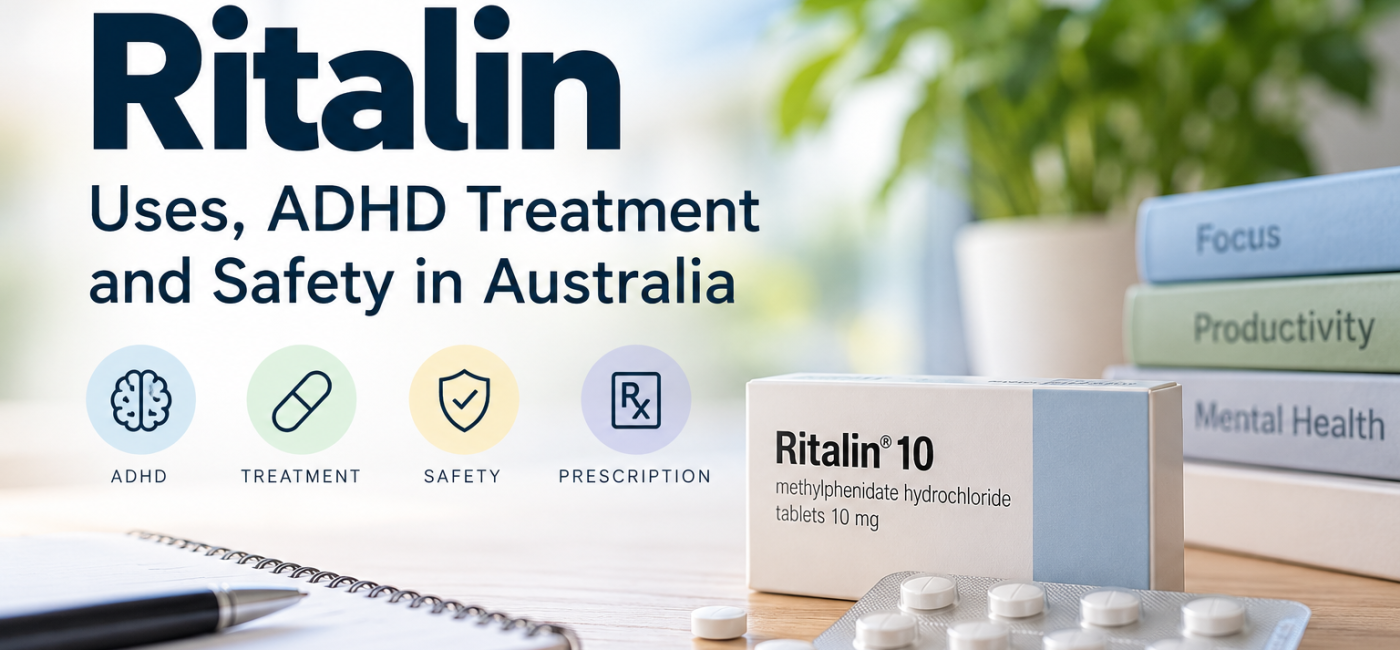
ADHD Medication in Australia: Types, Treatment Options and What to Know, Onlinepharmaustralia If you have been diagnosed with ADHD, you may be wondering which ADHD medications are available in Australia, how doctors choose between them, and what happens if the first medicine does not work well.
There is no single ADHD medication that is right for everyone.
Australian clinical guidance recommends that treatment decisions take into account the person’s symptoms, age, medical history, treatment goals, response to previous treatment, side effects and individual preferences.
ADHD medication can be an important part of treatment for some people, but medication is only one component of comprehensive ADHD care.
This guide explains the main types of ADHD medication used in Australia, including methylphenidate, lisdexamfetamine, dexamfetamine and non-stimulant options, as well as what patients should know about starting and monitoring treatment.
Quick Answer: What ADHD Medicines Are Available in Australia?
ADHD medicines used in Australia include stimulant and non-stimulant medicines.
Stimulant medicines include:
- methylphenidate
- lisdexamfetamine
- dexamfetamine
Non-stimulant options include medicines such as:
- atomoxetine
- guanfacine
The Australian ADHD Clinical Practice Guideline recommends medication choices based on the individual’s circumstances and supports shared decision-making between the person with ADHD and their healthcare professional. ADHD medication Australia Australian ADHD Clinical Practice Guideline
What Is ADHD Medication Used For?
ADHD medication is used to help manage symptoms associated with ADHD, which can include difficulties with:
- attention
- concentration
- impulsivity
- hyperactivity
- organisation
- task completion
- emotional regulation
The goal of treatment is not simply to eliminate every symptom.
Instead, clinicians generally consider whether treatment is improving day-to-day functioning and quality of life while keeping unwanted effects manageable. ADHD medication Australia
Healthdirect explains that ADHD medicines can help improve concentration and impulse control and reduce hyperactivity in people with ADHD. Healthdirect Australia — ADHD medicine
Stimulant vs Non-Stimulant ADHD Medication
The two broad categories are stimulants and non-stimulants.
Stimulant medicines
Stimulants include:
- methylphenidate
- dexamfetamine
- lisdexamfetamine
They affect chemical signalling in the brain and can improve ADHD symptoms in people who respond to treatment.
Non-stimulant medicines
Non-stimulant options work differently.
They may be considered when stimulant treatment is not effective enough, causes unacceptable side effects or is not appropriate for the individual.
The choice depends on the person’s circumstances and clinical assessment.
Methylphenidate for ADHD
Methylphenidate is one of the main stimulant medicines used for ADHD.
It is available in different formulations and brands in Australia, including Ritalin and Ritalin LA.
Different formulations release the medicine differently, which can affect how long the treatment provides symptom coverage.
This is why Ritalin and Ritalin LA should not simply be treated as identical medicines, even though they contain the same active ingredient.
You can read more about the differences in our guide to Ritalin vs Ritalin LA.
Ritalin for ADHD
contains methylphenidate and is used as part of ADHD treatment in Australia.
Ritalin is a prescription medicine and is classified as a Schedule 8 controlled drug. Healthdirect — Ritalin
Whether Ritalin is appropriate depends on the individual’s clinical circumstances.
A prescriber may consider:
- ADHD symptoms
- age
- medical history
- other medicines
- cardiovascular health
- previous treatment
- side effects
- treatment goals
Ritalin LA and Other Long-Acting Methylphenidate
Long-acting methylphenidate formulations can provide longer-lasting medication coverage than immediate-release preparations.
The Australian ADHD guideline recognises both short-acting and long-acting stimulant formulations and recommends individualising medication choice. Australian ADHD Clinical Practice Guideline — Medication
A longer-acting medicine may be considered when a person needs symptom management across a larger portion of the day or prefers a treatment that does not require repeated dosing.
Lisdexamfetamine for ADHD
Lisdexamfetamine is another stimulant medicine used in ADHD treatment.
It is converted in the body into an active form of amphetamine and has a different pharmacological profile from methylphenidate.
The Australian ADHD guideline includes lisdexamfetamine among stimulant medication options.
As with other ADHD medicines, suitability depends on the individual’s circumstances.
Dexamfetamine for ADHD
Dexamfetamine is another stimulant option used in appropriate patients.
It belongs to the amphetamine group of stimulant medicines.
A clinician may consider dexamfetamine when selecting an ADHD treatment based on the patient’s symptoms, response and treatment requirements.
Non-Stimulant ADHD Medicines
Not every person with ADHD responds well to stimulant treatment.
Non-stimulant medicines can therefore have an important role.
Atomoxetine
Atomoxetine is a non-stimulant medicine used for ADHD.
Unlike stimulant medicines, it works primarily through noradrenaline pathways.
Its effects and side-effect profile differ from those of stimulant medicines.
Guanfacine
Guanfacine is another non-stimulant option that may be considered in appropriate circumstances.
It works differently from stimulant ADHD medicines and may be useful for certain patients.
A clinician will determine whether a non-stimulant medicine is appropriate based on the individual’s circumstances.
Which ADHD Medication Is Best?
There is no universally “best” ADHD medication.
The appropriate treatment depends on the individual.
A clinician may consider:
- the person’s age
- symptom profile
- severity and functional impact
- other health conditions
- current medicines
- previous treatment
- side effects
- sleep
- cardiovascular factors
- treatment goals
- personal preferences
Two people with the same diagnosis can respond very differently to the same medicine.
This is why treatment should be individualised.
What Happens When Starting ADHD Medication?
Starting treatment usually involves more than receiving a prescription.
Your healthcare professional may discuss:
- Treatment goals
- Expected benefits
- Possible side effects
- How the medicine should be taken
- What to monitor
- When follow-up should occur
- What to do if treatment is ineffective
- What symptoms require urgent medical attention
The initial treatment plan may be adjusted after the clinician sees how you respond.
How Long Does ADHD Medication Take to Work?
The answer depends on the medication.
Some stimulant medicines can produce effects relatively quickly, while non-stimulant medicines may require more time before their full therapeutic effect can be assessed.
Patients should follow the instructions provided with their particular medicine.
Do not increase the dose because you do not notice an immediate improvement.
If the medicine does not appear to be working, discuss the situation with your prescriber.
What Are Common ADHD Medication Side Effects?
Side effects vary depending on the medicine.
For stimulant ADHD medicines, Healthdirect identifies potential effects including:
- reduced appetite
- difficulty sleeping
- headache
- stomach discomfort
- anxiety
- increased blood pressure
- weight loss. Healthdirect — ADHD medicine and side effects
Not everyone experiences these effects.
If side effects are persistent or interfering with everyday life, your healthcare professional should review them.
ADHD Medication and Appetite
Reduced appetite can occur with stimulant ADHD medicines.
This is particularly important for children and adolescents because adequate nutrition and healthy growth need to be maintained.
Healthdirect recommends monitoring height and weight in children receiving stimulant medication. Healthdirect Australia — ADHD medicine
Significant appetite or weight changes should be discussed with the treating clinician.
ADHD Medication and Sleep
Some ADHD medicines can affect sleep.
Difficulty sleeping is a recognised potential effect of stimulant medication.
However, sleep problems can also be caused by ADHD itself, anxiety, caffeine, stress or an underlying sleep disorder.
A healthcare professional can help determine what may be contributing to sleep difficulties.
ADHD Medication and Blood Pressure
Some stimulant medicines can increase blood pressure or heart rate.
This is one reason physical health monitoring forms part of ADHD medication management.
The Australian ADHD Clinical Practice Guideline recommends appropriate monitoring during medication treatment.
People with cardiovascular conditions should discuss their medical history with their healthcare professional before starting treatment.
How Is ADHD Medication Monitored?
Monitoring is an important part of treatment.
Follow-up may assess:
- ADHD symptoms
- daily functioning
- medication effectiveness
- appetite
- weight
- sleep
- blood pressure
- heart rate
- side effects
- adherence
- treatment goals
The Australian ADHD guideline recommends ongoing review to assess treatment effectiveness and adverse effects.
Medication should not be considered a “set and forget” treatment.
What If the First ADHD Medicine Does Not Work?
This is not unusual.
People can respond differently to different medicines.
If the first treatment is ineffective or causes unacceptable side effects, the clinician may consider:
- adjusting the treatment
- changing formulation
- trying another stimulant
- considering a non-stimulant
- reviewing the diagnosis
- assessing other health factors
- addressing sleep or other contributing factors
The Australian ADHD guideline supports switching treatment when the initial medicine is not sufficiently effective or tolerated.
Can ADHD Medication Be Changed?
Yes, a clinician may change treatment when there is a clinical reason to do so.
However, prescription ADHD medicines should not be switched, increased or stopped without appropriate medical guidance.
The correct approach depends on the medicine, formulation, dose and individual circumstances.
Do ADHD Medicines Cure ADHD?
No.
ADHD medication is used to manage symptoms. It does not remove the underlying neurodevelopmental condition.
Some people benefit substantially from medication, while others may require additional approaches.
Treatment can involve a combination of:
- medication
- psychological strategies
- behavioural approaches
- education
- workplace or educational adjustments
- lifestyle strategies
- environmental changes
ADHD Medication for Adults
ADHD medicines can be used in adults when treatment is clinically appropriate.
The Australian ADHD guideline includes stimulant medicines among pharmacological options for adults with ADHD.
Adult treatment may require particular attention to:
- work demands
- driving
- sleep
- cardiovascular health
- other medications
- mental health
- substance use
- daily responsibilities
The treatment plan should reflect the individual’s circumstances.
ADHD Medication for Children and Adolescents
Children and adolescents require age-appropriate assessment and monitoring.
Treatment decisions should involve parents or carers where appropriate and consider the child’s development, education, family environment and overall wellbeing.
Growth, appetite and sleep can be particularly important areas to monitor.
Can ADHD Medication Be Used During Pregnancy?
Pregnancy changes the risk-benefit considerations for medicines.
If you are pregnant, planning pregnancy or breastfeeding, tell your healthcare professional before starting, stopping or changing ADHD medication.
Do not make medication decisions based solely on online information.
The prescriber can assess your individual circumstances and discuss appropriate options.
Can You Drink Alcohol With ADHD Medication?
Alcohol can interact with medicines and may affect judgement, sleep and other aspects of health.
The risks depend on the specific ADHD medicine and individual circumstances.
Ask your doctor or pharmacist about alcohol if you have been prescribed ADHD medication.
Is ADHD Medication Addictive?
The answer is more complicated than a simple yes or no.
Some ADHD medicines are controlled medicines because they have recognised risks of misuse and dependence.
This does not mean that everyone taking them therapeutically will develop dependence.
Appropriate prescribing, secure storage, correct use and regular medical monitoring are important.
Never share prescription ADHD medication with another person.
Why You Should Not Buy ADHD Medicines From Unverified Websites
Prescription ADHD medicines should be obtained through legitimate healthcare and pharmacy channels.
Unverified websites can create risks involving:
- counterfeit medicines
- incorrect strengths
- poor storage conditions
- expired products
- contamination
- lack of clinical assessment
- drug interactions
- inappropriate treatment
A legitimate healthcare pathway provides clinical assessment, prescribing oversight and pharmacy support.
How Much Does ADHD Medication Cost in Australia?
The cost can vary according to:
- the medicine
- formulation
- prescription requirements
- PBS eligibility
- patient circumstances
- pharmacy
- quantity supplied
PBS information can change, so patients should check current Australian Government information rather than relying on an old online price.
Frequently Asked Questions
What is the most common ADHD medication in Australia?
There is no single medicine that is universally best or appropriate for everyone. Methylphenidate, lisdexamfetamine and dexamfetamine are among the stimulant medicines used in Australia.
Is Ritalin used for ADHD in Australia?
Yes. Ritalin contains methylphenidate and is used as part of ADHD treatment in Australia when clinically appropriate. Healthdirect — Ritalin
Is methylphenidate a stimulant?
Yes. Methylphenidate is a stimulant medicine used in ADHD treatment.
What if Ritalin does not work?
A healthcare professional can reassess the treatment. Depending on the circumstances, another formulation, stimulant or non-stimulant medicine may be considered.
Do ADHD medications have side effects?
Yes. Potential side effects vary by medicine. Stimulant medicines can cause reduced appetite, sleep difficulties, headache, anxiety and other effects. Healthdirect — ADHD medicine
Can adults take ADHD medication?
Yes. ADHD medication can be used in adults when clinically appropriate following assessment.
Can ADHD medication be taken long term?
Some people require long-term ADHD medication, but treatment should be periodically reviewed to assess effectiveness, side effects and changing needs.
Do I need an ADHD diagnosis before taking medication?
ADHD medicines should only be prescribed following appropriate clinical assessment and when a qualified prescriber determines that treatment is appropriate.
Final Takeaway
ADHD medication in Australia includes several stimulant and non-stimulant options, and there is no single medicine that is right for every person.
Methylphenidate medicines such as Ritalin, along with other stimulant and non-stimulant treatments, may be considered depending on the individual’s symptoms, health, treatment goals and response.
The most important part of treatment is not simply choosing a medicine. It is establishing an appropriate diagnosis, selecting treatment carefully and continuing to monitor whether the treatment is helping without causing unacceptable problems.
If you are considering ADHD treatment, speak with an appropriately qualified Australian healthcare professional about assessment and treatment options.
Medical Disclaimer
This article provides general educational information and does not replace individual medical advice, diagnosis or prescribing. ADHD medicines are prescription medicines and some are controlled substances in Australia. Always follow your prescriber’s instructions and consult a qualified healthcare professional or pharmacist before changing treatment.
Authoritative Sources
Australian Government health information
Australian ADHD Clinical Practice Guideline
Healthdirect Australia
Pharmaceutical Benefits Scheme