

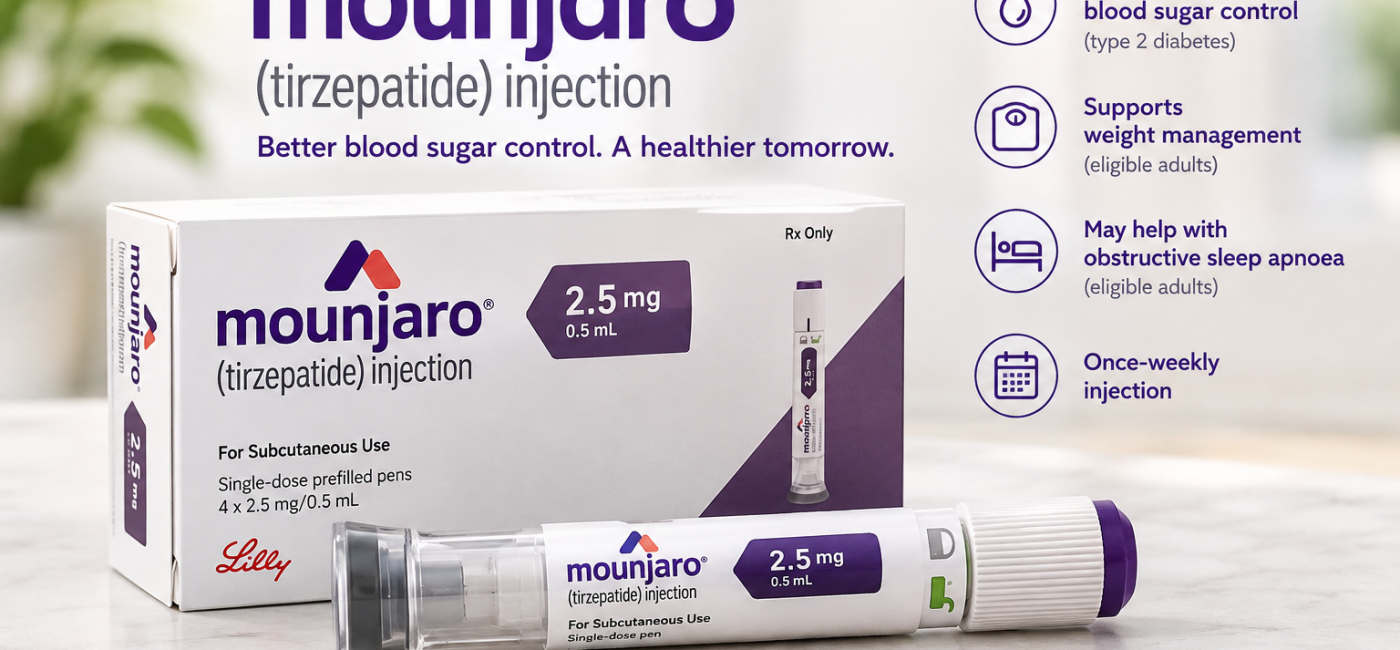
Mounjaro Contraindications and Precautions: Who Should Not Take Tirzepatide, Onlinepharmaustralia Mounjaro (tirzepatide) is a prescription medicine used in Australia for appropriate adults with type 2 diabetes, chronic weight management and, in adults with obesity, moderate to severe obstructive sleep apnoea.
However, Mounjaro is not suitable for everyone.
Some people should not use tirzepatide, while others may be able to use it but require additional assessment, monitoring or dose adjustments.
Understanding these precautions before starting treatment can help you have a safer and more informed discussion with your doctor.
Who should not take Mounjaro?
According to the Australian Consumer Medicine Information, Mounjaro should not be used by people who have had an allergic reaction to tirzepatide or any of its ingredients. Mounjaro contraindications
Mounjaro is also not intended for children and adolescents under 18 because it has not been studied in this age group. Mounjaro contraindications
Mounjaro should also not be used during pregnancy.
If you are pregnant, planning to become pregnant or think you may be pregnant, speak with your doctor before using tirzepatide.
Mounjaro and an allergy to tirzepatide
You should not use Mounjaro if you have previously experienced a serious allergic reaction to tirzepatide or any ingredient in the medicine.
Signs of a serious allergic reaction can include:
- Swelling of the face, lips, tongue or throat
- Difficulty breathing or swallowing
- Severe rash
- Rapid heartbeat
- Dizziness or fainting
A severe allergic reaction requires urgent medical attention.
Tell your doctor about previous allergic reactions to medicines before starting Mounjaro.
Mounjaro and pregnancy
Mounjaro should not be used during pregnancy.
There is not enough human pregnancy data to establish the safety of tirzepatide for an unborn baby. Animal studies have identified reproductive and developmental concerns.
If you become pregnant while taking Mounjaro, contact your healthcare professional promptly.
The TGA also advises that GLP-1 receptor agonists marketed in Australia, including Mounjaro, are not recommended during pregnancy. (tga.gov.au)
If you are planning pregnancy, discuss your treatment before trying to conceive.
Mounjaro and breastfeeding
It is not known whether tirzepatide passes into human breast milk.
Because there is insufficient information about the effects on a breastfed infant, people who are breastfeeding should discuss Mounjaro with their doctor before starting or continuing treatment.
Your healthcare professional can consider your medical needs, breastfeeding plans and available alternatives.
Mounjaro and pancreatitis
Pancreatitis is inflammation of the pancreas.
Acute pancreatitis has been reported in people treated with tirzepatide. The Australian Product Information states that Mounjaro should be used with caution in people with a history of pancreatitis. (tga.gov.au)
Important symptoms include:
- Severe or persistent abdominal pain
- Pain that may spread to the back
- Abdominal pain accompanied by vomiting
If pancreatitis is suspected, Mounjaro should be discontinued and medical assessment is required.
If pancreatitis is confirmed, the Australian Product Information states that tirzepatide should not be restarted.
Having had pancreatitis does not automatically mean that every person can never receive tirzepatide, but it is an important issue to discuss with the prescribing clinician.
Mounjaro and severe gastroparesis
Mounjaro slows gastric emptying.
People with severe gastrointestinal disease, including severe gastroparesis, require particular caution.
The Australian Product Information states that tirzepatide has not been studied in people with severe gastrointestinal disease, including severe gastroparesis. Mounjaro contraindications
Gastroparesis is a condition in which the stomach takes longer than normal to empty.
Symptoms can include:
- Feeling full very quickly
- Persistent nausea
- Vomiting
- Bloating
- Upper abdominal discomfort
- Difficulty eating enough food
If you have severe or persistent gastrointestinal symptoms, tell your doctor before starting Mounjaro.
Mounjaro and kidney problems
Mounjaro does not automatically have to be avoided in everyone with kidney impairment.
However, vomiting and diarrhoea can cause dehydration, and severe dehydration can worsen kidney function.
The Australian Product Information advises particular attention to renal function when patients with renal impairment experience severe gastrointestinal reactions. Mounjaro contraindications
Tell your doctor if you have kidney disease or reduced kidney function before starting treatment.
Seek medical advice if you develop persistent vomiting, severe diarrhoea, difficulty maintaining fluid intake or symptoms of significant dehydration.
Mounjaro and liver problems
Tell your doctor if you have liver impairment.
Mounjaro does not automatically mean that treatment is unsuitable for every person with liver disease, but your overall medical condition should be considered before treatment.
Your doctor can determine whether tirzepatide is appropriate and whether additional monitoring is needed.
Mounjaro and diabetes
Mounjaro is used to improve blood glucose control in adults with type 2 diabetes.
It should not be used as a treatment for type 1 diabetes or diabetic ketoacidosis.
If you have type 1 diabetes, diabetic ketoacidosis or require insulin for another reason, your treatment needs to be assessed by an appropriate healthcare professional. Mounjaro contraindications
Mounjaro should not be used as a substitute for insulin in someone who needs insulin treatment.
Mounjaro and hypoglycaemia
Mounjaro itself has a relatively low risk of causing hypoglycaemia when used alone.
The risk can increase when tirzepatide is combined with insulin or an insulin secretagogue such as a sulfonylurea.
Your doctor may need to adjust the dose of these medicines and may recommend additional blood glucose monitoring.
Symptoms of hypoglycaemia can include:
- Shaking
- Sweating
- Hunger
- Dizziness
- Weakness
- Confusion
- Fast heartbeat
If you use insulin or a sulfonylurea, make sure your prescriber knows before starting Mounjaro.
Mounjaro and diabetic retinopathy
People with diabetes who have diabetic retinopathy should tell their doctor before starting Mounjaro.
Changes in blood glucose control can sometimes affect diabetic retinopathy, particularly when glucose levels improve rapidly.
The Australian Consumer Medicine Information advises people with diabetic retinopathy to discuss this with their doctor because additional monitoring may be required. Mounjaro contraindications
If you notice new or worsening changes in your vision, seek medical advice.
Mounjaro and sudden vision loss
Australian safety information for GLP-1 receptor agonists was updated in 2026 following concerns about a rare eye disorder called non-arteritic anterior ischaemic optic neuropathy, or NAION.
NAION can cause sudden visual impairment and, in some cases, permanent loss of vision.
The TGA advises people taking GLP-1 receptor agonists, including Mounjaro, to seek urgent medical attention if they experience sudden loss of vision, including partial loss of vision. Mounjaro contraindications
Sudden vision loss should never be ignored.
Mounjaro and suicidal thoughts or mental health concerns
The Australian Mounjaro information advises people to tell their doctor if they have thoughts of suicide or death.
If you experience new or worsening suicidal thoughts, seek urgent medical help.
Mental health symptoms should be taken seriously regardless of whether you believe they are related to a medicine.
Your doctor can assess your symptoms and determine the safest treatment plan.
Mounjaro and malnutrition
Mounjaro can reduce appetite.
For some people, appetite reduction can become excessive, particularly when gastrointestinal side effects are significant.
The Australian Product Information reports cases of malnutrition, including severe cases, in people treated with tirzepatide. It notes that nutritional deficiencies can include inadequate protein, vitamins or minerals. Mounjaro contraindications
Tell your healthcare professional if you:
- Are struggling to eat enough
- Are losing weight very rapidly
- Have persistent vomiting or diarrhoea
- Have significant weakness
- Cannot maintain adequate fluid intake
- Have concerns about nutritional deficiencies
Weight management should focus on improving health rather than simply reducing the number on the scale.
Mounjaro and dehydration
Nausea, vomiting and diarrhoea are among the gastrointestinal side effects associated with Mounjaro.
If these symptoms are severe or persistent, they can lead to dehydration.
Symptoms of dehydration can include:
- Very dark urine
- Reduced urination
- Dry mouth
- Dizziness
- Weakness
- Excessive thirst
People with kidney problems may be particularly vulnerable to complications from dehydration.
Drink appropriate amounts of fluid and contact your healthcare professional if gastrointestinal symptoms become severe or persistent.
Mounjaro before surgery or anaesthesia
Mounjaro slows gastric emptying.
This matters before general anaesthesia or deep sedation because stomach contents may remain in the stomach for longer than expected.
The TGA has required warnings for Mounjaro and other GLP-1 or related medicines concerning the potential risk of aspiration of stomach contents during general anaesthesia or deep sedation.Mounjaro contraindications
If you are scheduled for:
- Surgery
- General anaesthesia
- Deep sedation
- An endoscopic procedure involving sedation
tell your doctor, surgeon and anaesthetist that you are taking Mounjaro.
Do not stop Mounjaro on your own. Your healthcare team will determine how your treatment should be managed before the procedure.
Mounjaro and oral contraceptives
Mounjaro can affect the absorption of oral medicines because it slows gastric emptying.
The TGA has specifically updated its advice concerning oral hormonal contraceptives.
People using oral hormonal contraception are advised to switch to a non-oral method or add a barrier method for 4 weeks after starting Mounjaro and for 4 weeks after each dose escalation. Mounjaro contraindications
This is particularly important for people who want to avoid pregnancy.
Mounjaro and other medicines
Tell your doctor or pharmacist about all medicines you take.
This includes:
- Prescription medicines
- Over-the-counter medicines
- Vitamins
- Herbal products
- Traditional medicines
- Weight-loss supplements
Particular attention may be needed if you use insulin, sulfonylureas, oral hormonal contraceptives or oral medicines with a narrow therapeutic index.
Mounjaro should not be combined with another tirzepatide-containing medicine or another GLP-1 receptor agonist unless specifically directed by your healthcare professional.
Who should discuss Mounjaro with their doctor before starting?
Even if Mounjaro is not specifically contraindicated for you, tell your doctor if you have:
- A history of pancreatitis
- Severe gastrointestinal disease
- Gastroparesis
- Kidney impairment
- Liver impairment
- Diabetic retinopathy
- Diabetes treated with insulin
- Diabetes treated with a sulfonylurea
- A history of serious medicine allergies
- A history of significant mental health concerns
- Current or previous nutritional problems
- A planned operation or procedure requiring anaesthesia
- Pregnancy or plans for pregnancy
- Breastfeeding plans
This information helps your prescriber determine whether Mounjaro is appropriate and what monitoring may be needed.
What medical information should you provide before your first Mounjaro dose?
A good medication consultation should cover more than your current weight.
Tell your healthcare professional about:
Your medical history
Include major illnesses, previous surgeries and chronic conditions.
Your medication history
Provide the names and doses of prescription and non-prescription medicines.
Previous pancreatitis
This is particularly important because tirzepatide should be used cautiously in people with a history of pancreatitis.
Digestive problems
Mention gastroparesis, persistent nausea, vomiting, severe reflux or other significant gastrointestinal disease.
Diabetes treatment
Tell your doctor whether you use insulin, sulfonylureas or other glucose-lowering medicines.
Eye problems
Mention diabetic retinopathy or significant changes in vision.
Pregnancy plans
Tell your doctor if you are pregnant, trying to become pregnant or breastfeeding.
Upcoming procedures
Make sure your surgical and anaesthetic teams know that you take Mounjaro.
Is Mounjaro safe for everyone with obesity?
No medicine is appropriate for everyone.
Mounjaro may be an appropriate treatment for some adults with obesity or overweight who meet the relevant Australian treatment criteria, but suitability depends on the person’s medical history, current medicines, risks and treatment goals.
A prescription should follow an individual clinical assessment rather than weight alone.
Can my doctor stop Mounjaro if it becomes unsafe?
Yes.
Your healthcare professional may recommend changing the dose, pausing treatment or discontinuing Mounjaro if significant adverse effects or safety concerns develop.
For example, suspected pancreatitis requires prompt medical assessment, and confirmed pancreatitis means tirzepatide should not be restarted according to the Australian Product Information.
Severe gastrointestinal symptoms may also require treatment review.
Never restart Mounjaro after a serious adverse reaction without medical advice.
When should you seek urgent medical help?
Seek urgent medical attention if you experience:
- Sudden loss of vision
- Difficulty breathing or severe swelling after an injection
- Severe or persistent abdominal pain
- Severe dehydration
- Severe weakness or confusion
- Symptoms of significant hypoglycaemia
- Other serious or rapidly worsening symptoms
Sudden vision loss is particularly important because of the TGA’s 2026 safety warning concerning rare NAION associated with GLP-1 receptor agonist medicines. Mounjaro contraindications
Frequently Asked Questions
Who should not take Mounjaro?
Mounjaro should not be used by people with a known serious allergy to tirzepatide or its ingredients. It should also not be used during pregnancy and is not intended for people under 18. Other medical conditions may require caution or closer monitoring rather than automatically preventing treatment.
Can I take Mounjaro if I have had pancreatitis?
A previous history of pancreatitis should be discussed with your doctor. The Australian Product Information states that tirzepatide should be used with caution in people with a history of pancreatitis.
Can I take Mounjaro if I have gastroparesis?
People with severe gastroparesis or severe gastrointestinal disease require particular caution. Mounjaro has not been adequately studied in people with severe gastrointestinal disease, including severe gastroparesis.
Can I take Mounjaro with kidney disease?
Kidney disease does not automatically mean that Mounjaro cannot be used. However, severe vomiting or diarrhoea can cause dehydration and potentially worsen kidney function, so your doctor may need to monitor you more closely.
Can I take Mounjaro if I have diabetes?
Mounjaro is approved for adults with type 2 diabetes. It is not a treatment for type 1 diabetes or diabetic ketoacidosis.
Can I take Mounjaro if I use insulin?
It may be possible, but combining Mounjaro with insulin can increase the risk of hypoglycaemia. Your doctor may need to adjust your insulin dose.
Can I take Mounjaro during pregnancy?
No. Mounjaro should not be used during pregnancy. Speak with your healthcare professional if you become pregnant while taking tirzepatide.
Should I tell my anaesthetist that I use Mounjaro?
Yes. Tell your anaesthetist before general anaesthesia or deep sedation because Mounjaro delays gastric emptying and may increase the risk associated with stomach contents during anaesthesia.
Does Mounjaro cause vision problems?
Vision-related problems can have several causes. The TGA added a warning in 2026 about the rare eye disorder NAION associated with GLP-1 receptor agonist medicines. Sudden vision loss requires urgent medical assessment.
The Bottom Line
Mounjaro can be an effective prescription treatment for appropriately selected patients, but it is not suitable for everyone.
Before starting tirzepatide, your doctor should know about your medical history, current medicines, previous pancreatitis, gastrointestinal conditions, diabetes treatment, kidney and liver health, eye conditions, pregnancy plans and upcoming procedures.
The most important rule is simple: do not decide whether Mounjaro is safe for you based on an online checklist alone.
A qualified healthcare professional should assess your individual circumstances and determine whether tirzepatide is appropriate.