

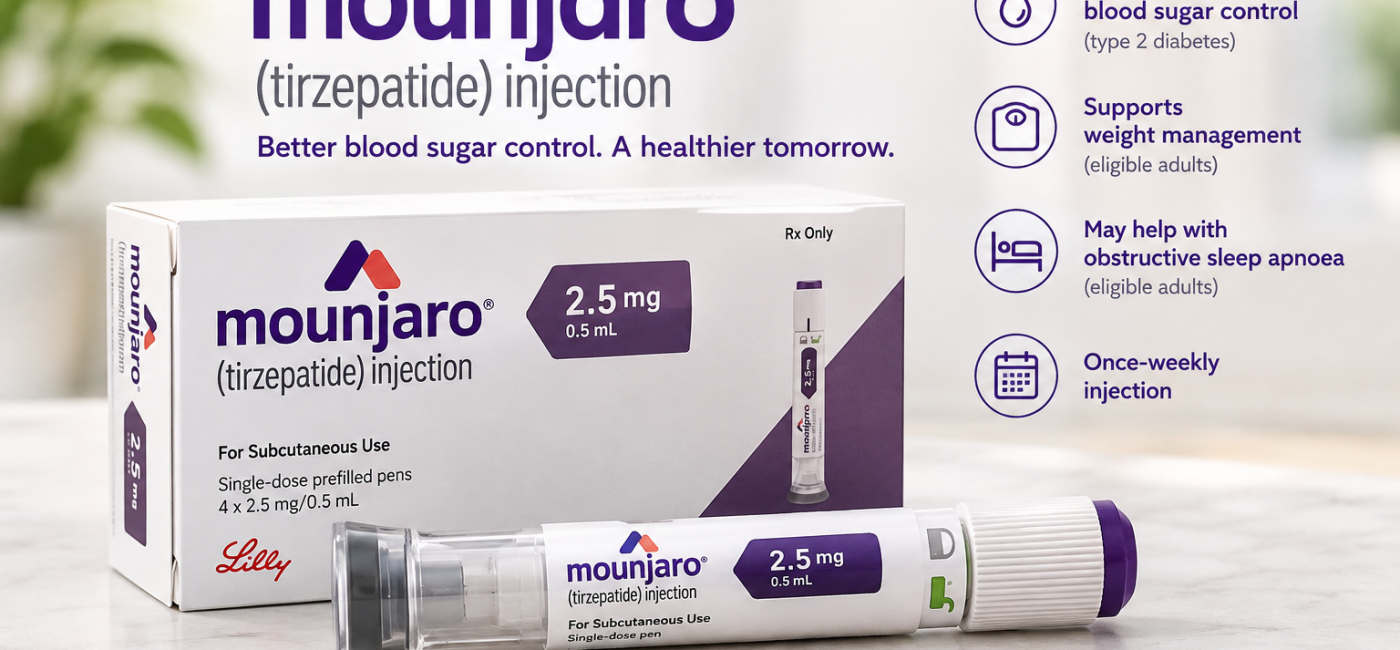
Mounjaro weight loss timeline, If you have recently started Mounjaro (tirzepatide) Onlinepharmaustralia for weight management, you may be wondering when weight loss starts and how quickly results might appear.
There is no single Mounjaro weight loss timeline that applies to everyone. Some people notice changes in appetite and eating patterns relatively early, while changes in body weight generally develop progressively over weeks and months.
Clinical trials of tirzepatide evaluated weight loss over many months rather than a few days. Your individual results can differ considerably depending on factors such as your starting weight, prescribed dose, treatment duration, diet, physical activity, health conditions and response to the medicine.
This guide explains what may happen during different stages of Mounjaro treatment without promising a particular amount of weight loss.
Quick answer: When does Mounjaro start working for weight loss?
Mounjaro begins acting in the body after administration, but visible weight loss is not necessarily immediate.
Tirzepatide reaches maximum blood concentrations approximately 8 to 72 hours after a dose, while steady-state exposure is reached after around four weeks of once-weekly administration.
However, the medicine beginning to act and seeing a measurable change on the scales are two different things.
For weight management, it is more useful to evaluate progress over weeks and months, rather than expecting a particular result after the first injection.
For detailed Australian medicine information, see the Australian Mounjaro Consumer Medicine Information.
How does Mounjaro support weight loss?
Mounjaro contains tirzepatide, which acts on glucose-dependent insulinotropic polypeptide (GIP) and glucagon-like peptide-1 (GLP-1) receptors.
These pathways are involved in processes including appetite regulation, glucose metabolism and digestion.
For weight management, tirzepatide can help reduce appetite and food intake. It also delays gastric emptying.
Mounjaro is not intended to replace nutrition, physical activity or medical follow-up. For chronic weight management, it is used alongside a reduced-calorie diet and increased physical activity when clinically appropriate.
Mounjaro weight loss timeline at a glance
A simplified treatment timeline may look like this:
Week 1: Treatment begins and tirzepatide starts acting in the body.
Weeks 2–4: Some people notice changes in appetite or eating patterns. Body weight may begin changing, although results vary considerably.
After week 4: The standard starting-dose period is complete and dose escalation may begin according to the prescribed schedule.
Months 2–3: Changes in weight may become easier to identify as a trend rather than normal daily fluctuations.
Months 3–6: Continued treatment, nutrition, activity and appropriate dose escalation may produce more noticeable cumulative changes.
Months 6–12+: Longer-term treatment can produce substantial weight reduction in some patients, but individual outcomes vary.
This is not a prediction of your individual results. It is a general framework for understanding why Mounjaro weight loss should be evaluated over time.
Mounjaro weight loss during the first week
A common search is:
“How much weight can I lose on Mounjaro in the first week?”
There is no medically reliable number that applies to everyone.
During the first week, tirzepatide has begun acting, but your body is also adjusting to treatment.
Some people may notice:
- reduced appetite
- feeling satisfied after smaller meals
- changes in eating patterns
- gastrointestinal effects
Others may notice relatively little.
A change on the scales during the first few days can also reflect changes in water, food intake and bowel contents rather than body fat alone.
Therefore, first-week weight loss should not be used to predict your eventual treatment outcome.
Mounjaro weight loss during weeks 2–4
The first four weeks are particularly important because Mounjaro normally begins with a 2.5 mg once-weekly starting dose.
According to Australian medicine information, after four weeks the dose is generally increased to 5 mg once weekly. Further increases can be made in 2.5 mg increments after at least four weeks on the current dose when clinically appropriate.
The maximum recommended dose is 15 mg once weekly.
Your prescriber determines the appropriate dose for you.
Never increase your dose yourself in an attempt to accelerate weight loss.
See the Australian Mounjaro Consumer Medicine Information for current dosing and safety information.
Mounjaro weight loss after one month
After approximately four weeks, some people may be able to identify an early weight trend.
Others may see relatively little change.
Both situations require context.
The first month occurs during the initial dose period, and long-term clinical outcomes cannot be predicted reliably from a few weeks of treatment.
Instead of asking:
“Did I lose enough weight this month?”
a more useful question may be:
“How am I responding to treatment overall?”
Your healthcare professional may consider factors such as:
- weight trend
- appetite
- dietary intake
- physical activity
- tolerability
- side effects
- blood glucose where relevant
- other health conditions
- other medicines
- adherence to treatment
Mounjaro weight loss after two months
By the second month, treatment may have progressed beyond the initial 2.5 mg starting dose.
Some people may notice more consistent changes in appetite and body weight. Mounjaro weight loss timeline
However, there is still no universal target for the amount you should have lost by week eight.
Comparing your progress with someone’s social-media transformation can be particularly misleading.
Their starting weight, health, dose, treatment duration and lifestyle may be completely different from yours.
Mounjaro weight loss after three months
At around three months, a longer-term weight trend may become easier to assess than it was during the first few weeks.
This does not mean everyone should have achieved a particular percentage of weight loss by this point.
Your prescriber may review your progress, treatment tolerance and overall clinical goals.
If you believe Mounjaro is not working, do not increase the dose yourself. Discuss your progress with your healthcare professional. Mounjaro weight loss timeline
Mounjaro weight loss after six months
Six months provides a substantially longer period over which to evaluate treatment than the first few weeks.
For some patients, cumulative changes in appetite, calorie intake and body weight can become increasingly apparent over this period.
However, weight loss rarely follows a perfectly straight line.
You might experience periods when your weight changes relatively quickly and periods when progress is slower.
A plateau does not automatically mean the medicine has permanently stopped working.
Mounjaro weight loss after one year
Longer-term clinical trials provide a much more useful picture of tirzepatide’s potential effect on body weight than first-week anecdotes.
One of the major studies was the SURMOUNT-1 trial, which included 2,539 adults with obesity, or overweight with at least one weight-related complication, without diabetes.
At 72 weeks, the mean percentage change in body weight was:
- −15.0% with 5 mg tirzepatide
- −19.5% with 10 mg tirzepatide
- −20.9% with 15 mg tirzepatide
- −3.1% with placebo
These are average clinical-trial results, not promises of what an individual patient will achieve.
You can review the original peer-reviewed study in the New England Journal of Medicine — SURMOUNT-1 trial.
How much weight can you lose on Mounjaro?
There is no guaranteed amount.
Clinical trials tell us what happened to groups of participants under controlled study conditions. They cannot tell you exactly how many kilograms you personally will lose.
Your results can be influenced by:
- starting body weight
- treatment duration
- prescribed dose
- nutrition
- physical activity
- medication adherence
- other medicines
- medical conditions
- individual biological response
This is why claims such as “Mounjaro will make you lose 10 kg in one month” should be treated cautiously.
A responsible medical source should not guarantee a specific result.
Does Mounjaro cause more weight loss at higher doses?
In clinical trials, higher maintenance doses were associated with greater average weight reduction.
However, this does not mean patients should attempt to reach the highest dose as quickly as possible.
Mounjaro uses gradual dose escalation for a reason.
Your healthcare professional determines whether increasing the dose is appropriate based on your response, treatment goals and tolerability.
More medicine does not automatically mean a better individual outcome.
Why am I not losing weight on Mounjaro?
There are several possible reasons why your results may differ from what you expected.
You recently started treatment
The first few weeks are too early to judge long-term results.
You are still on the starting dose
The 2.5 mg dose is the initial stage of the dosing schedule.
Weight naturally fluctuates
Hydration, salt intake, food intake, bowel movements and other factors can change your weight from one day to another.
Your response is individual
People do not respond identically to medicines.
Other health factors may be involved
Medical conditions, medicines and other physiological factors can influence body weight.
If your progress concerns you, discuss it with your healthcare professional rather than adjusting treatment yourself.
Why does Mounjaro weight loss sometimes slow down?
Weight loss is rarely linear.
As body weight changes, energy requirements can also change. Appetite, activity, food intake and other biological factors can influence the rate of further weight loss.
Periods of slower progress can therefore occur.
A temporary plateau does not necessarily mean treatment has failed.
Your healthcare professional can help determine whether your current progress is clinically appropriate and whether other aspects of your treatment plan should be reviewed.
Can diet affect your Mounjaro weight loss results?
Nutrition remains important during treatment.
Because Mounjaro can reduce appetite, some patients may find themselves eating considerably less than before.
The goal should not simply be to eat as little as possible.
Adequate protein, fibre, micronutrients and hydration remain important.
A healthcare professional or accredited practising dietitian can provide individualized dietary advice, particularly if you have diabetes, gastrointestinal symptoms or another health condition.
Does exercise improve results on Mounjaro?
Physical activity is an important component of long-term weight management.
Exercise can also support cardiovascular health, physical function and maintenance of lean body mass.
Your exercise program should be appropriate for your current health, mobility and fitness level.
Someone who has been inactive or has significant medical conditions should discuss major changes in physical activity with an appropriate healthcare professional.
Should you weigh yourself every day on Mounjaro?
You can, but daily measurements can be misleading if interpreted in isolation.
Body weight naturally fluctuates.
For many people, monitoring the trend over time provides more useful information than reacting to every daily increase or decrease.
Consistency also matters. If you monitor weight, doing so under similar conditions can make comparisons more meaningful.
What if Mounjaro is working but my weight has stopped changing?
A weight-loss plateau can happen.
Do not respond by:
- taking an extra injection
- injecting more frequently
- skipping meals
- dramatically restricting calories
- increasing your dose without medical advice
Instead, speak with your healthcare professional.
Your treatment plan may need to be reviewed in the context of your health, nutrition, physical activity, dose and overall progress.
Can Mounjaro cause rapid weight loss?
Some individuals may lose weight faster than others.
Rapid or excessive weight loss is not automatically better.
If you are losing weight very quickly, struggling to eat adequately, feeling weak, becoming dehydrated or experiencing significant gastrointestinal symptoms, contact your healthcare professional.
The objective of medical weight management is not simply to make the number on the scales fall as quickly as possible.
What happens if you stop taking Mounjaro?
Weight management is a long-term issue, and stopping pharmacological treatment may affect appetite and body weight.
The SURMOUNT-4 trial provides useful evidence.
Participants first received tirzepatide during a 36-week lead-in period. Those who were then switched to placebo experienced substantial weight regain, whereas participants who continued tirzepatide maintained and further increased their initial weight reduction over the following 52 weeks.
This reinforces an important point: obesity and chronic weight management should not be viewed simply as a short course of treatment followed by permanent results.
Never stop prescribed treatment solely because of something you read online. Discuss changes with your healthcare professional.
Mounjaro weight loss timeline: realistic expectations
Rather than setting an internet-derived goal such as:
“I must lose X kilograms every week,”
focus on medically appropriate progress.
Your healthcare professional can assess:
- your starting health
- weight trajectory
- waist circumference where appropriate
- blood glucose and metabolic measures
- nutrition
- activity
- treatment tolerance
- side effects
- overall health improvements
Body weight is important, but it is not the only measure of health.
Frequently Asked Questions
When does Mounjaro start working for weight loss?
Tirzepatide begins acting after administration, but visible weight loss generally develops progressively rather than immediately. Individual responses vary considerably.
How much weight can you lose on Mounjaro in one month?
There is no reliable amount that applies to everyone. The first month also corresponds with the initial 2.5 mg once-weekly starting-dose period in the standard Australian dosing schedule.
How much weight can you lose on Mounjaro in three months?
Results vary. Clinical trials primarily provide information about group averages over much longer periods, so a particular three-month result should not be guaranteed.
Does Mounjaro work in the first week?
Mounjaro begins acting after treatment starts, but substantial visible weight loss should not necessarily be expected during the first week.
Why am I not losing weight on Mounjaro 2.5 mg?
The 2.5 mg dose is the starting dose. Early results vary considerably. Do not increase your dose without your prescriber’s advice.
Does Mounjaro weight loss happen every week?
Not necessarily. Body weight can fluctuate, and weight loss is rarely perfectly linear.
How long does Mounjaro take to work?
The answer depends on which effect you are measuring. The medicine begins acting after administration, but appetite, blood glucose and body-weight changes can occur over different timelines.
Can I increase my Mounjaro dose to lose weight faster?
Do not change your prescribed dose yourself. Dose escalation should follow your healthcare professional’s instructions.
What happens when you stop Mounjaro?
Clinical research indicates that weight regain can occur after tirzepatide withdrawal. Long-term treatment decisions should therefore be discussed with your healthcare professional.
The Bottom Line
The Mounjaro weight loss timeline is different for every patient.
Mounjaro begins acting after treatment starts, but meaningful changes in body weight generally develop over weeks and months rather than overnight.
The first four weeks represent the initial stage of treatment. Longer-term clinical trials have demonstrated substantial average weight reduction with tirzepatide, but those averages should never be interpreted as a guarantee of individual results.
Instead of comparing your progress with another person’s first-week or first-month results, focus on your own longer-term trend and treatment goals.
Use Mounjaro exactly as prescribed, maintain the lifestyle measures recommended by your healthcare professional and attend appropriate follow-up appointments.
If you are concerned that you are losing weight too slowly, too quickly or not at all, speak with your prescribing healthcare professional rather than changing the dose yourself.
Medical disclaimer
This article provides general educational information and does not replace individualized medical advice, diagnosis or treatment.
Mounjaro (tirzepatide) is a prescription medicine. Treatment suitability, dosing and monitoring should be determined by an appropriately qualified healthcare professional.
Always consult the current Australian Consumer Medicine Information and seek medical advice if you have questions about your treatment.