

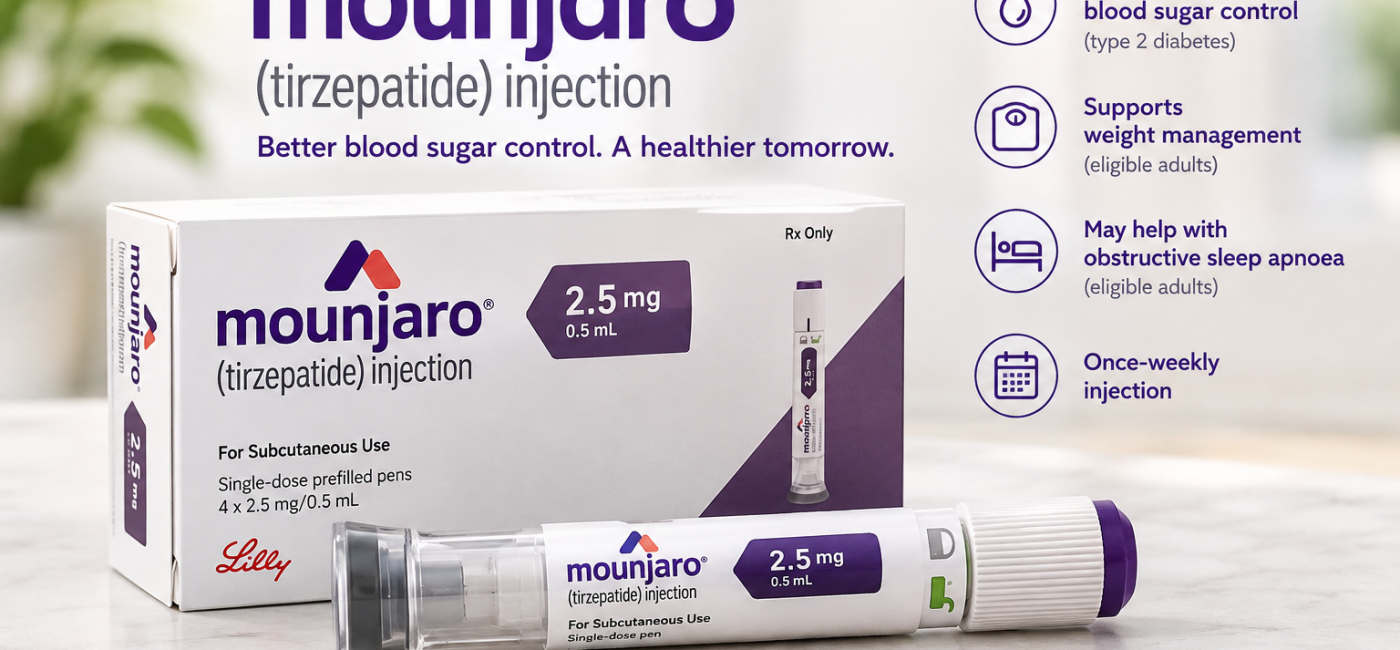
Buy Mounjaro online in australia from Onlinepharmaustralia. Losing weight with Mounjaro can feel like reaching an important milestone. But many people eventually ask a less discussed question:
What happens when Mounjaro is stopped?
The answer is more complicated than simply saying that the weight will stay off or come back.
Mounjaro contains tirzepatide, which acts on the GIP and GLP-1 receptors and is authorised in the European Union for weight management in eligible adults alongside a reduced-calorie diet and increased physical activity. The medicine has a half-life of approximately five days, which allows once-weekly administration.
When treatment is withdrawn, the amount of tirzepatide in the body gradually falls. As the pharmacological effect diminishes, the appetite and weight-regulation effects associated with treatment may also change.
The most important point is this:
Stopping Mounjaro does not guarantee that weight will remain at the level reached during treatment.
Current evidence shows that weight regain after stopping tirzepatide is common, although the amount varies considerably between individuals.
what happens when you stop Mounjaro: Why does weight regain happen after stopping Mounjaro?
Weight management is not controlled by willpower alone.
Body weight is influenced by appetite, energy intake, hormones, metabolism, behaviour, environment and numerous biological processes. When a medication changes some of these processes, stopping the medication can change them again.
Tirzepatide activates GIP and GLP-1 receptors. Its effects include influencing appetite and food intake, which contributes to its ability to support weight reduction in appropriate patients.
Once treatment is withdrawn, those drug-related effects gradually diminish.
This can mean that some people notice:
- increased hunger;
- stronger food cravings;
- larger portions becoming easier to eat;
- a reduction in the feeling of fullness;
- gradual weight regain.
Not everyone experiences these changes to the same degree.
A person’s response depends on their health, previous weight trajectory, lifestyle, treatment history and other factors.
What does the research show about stopping Mounjaro?
One of the most useful studies for answering this question is SURMOUNT-4.
The trial enrolled adults with obesity or overweight who did not have diabetes. Participants first received tirzepatide for 36 weeks and achieved a mean weight reduction of 20.9%.
They were then randomly assigned either to continue tirzepatide or switch to placebo for another 52 weeks.
The results were striking.
Participants who continued tirzepatide lost another 5.5% of their body weight during the next 52 weeks.
Participants switched to placebo experienced a mean 14.0% increase in body weight during the same period. Overall, the continued-treatment group had a mean 25.3% weight reduction from the beginning of the study to week 88, compared with 9.9% in the group that stopped active treatment.
These results do not mean that everyone who stops Mounjaro will regain 14% of their body weight.
The 14.0% figure describes the average change observed during a particular phase of a clinical trial.
That distinction matters.
Newer 2026 evidence gives an even clearer picture
A 2026 post-hoc analysis of SURMOUNT-4 looked more closely at people who regained weight after tirzepatide withdrawal.
Among participants included in that analysis, 82% regained at least 25% of the weight they had previously lost within one year of stopping treatment. Greater weight regain was also associated with a greater reversal of some cardiometabolic improvements achieved during treatment.
This does not mean that every patient will regain most of their weight.
It means that, at a population level, substantial regain was common after treatment withdrawal in this study.
The authors noted that the findings support the concept that obesity treatment may need to be continued over time rather than assuming that medication can simply be stopped once a target weight has been reached.
Does everyone regain weight after stopping Mounjaro?
No.
The evidence shows a strong average tendency toward weight regain after withdrawal, but individual responses vary.
Some people may maintain a significant portion of their weight reduction.
Others may regain much or most of the weight they lost.
There is no reliable way to predict an individual’s result simply from their Mounjaro dose or the number of kilograms they lost.
This is one reason online testimonials can be misleading.
Two people can use the same medicine for a similar period and have very different experiences after stopping.
What happens to appetite after stopping Mounjaro?
One of the most noticeable changes for some people may be appetite.
Tirzepatide affects pathways involved in appetite and food intake. Once treatment is stopped and drug exposure gradually declines, those effects will no longer be maintained at the same level.
Some people may therefore notice that:
- they feel hungry more often;
- meals feel less filling;
- cravings become more noticeable;
- larger portions become easier to tolerate.
This does not mean that stopping Mounjaro causes a personal failure or that someone has “lost discipline”.
It reflects the fact that the medication was influencing biological processes involved in appetite regulation.
How quickly does Mounjaro leave the body?
Tirzepatide has an elimination half-life of approximately five days. This long half-life is one reason it can be administered once per week.
The medicine therefore does not disappear immediately after the final injection.
Drug levels decline gradually over time.
The timing of changes in appetite or weight can also vary between individuals, so there is no single day when everyone will suddenly notice that the medicine has “stopped working”.
Does stopping Mounjaro cause withdrawal?
Stopping a prescription medicine is not the same question as experiencing a classic withdrawal syndrome.
For Mounjaro, the more relevant concern is that its therapeutic effects gradually diminish as tirzepatide exposure falls.
Someone using tirzepatide for weight management may notice changes in appetite and weight.
For someone using tirzepatide for type 2 diabetes, changes in treatment can also have implications for glucose management.
That is why people should not independently stop or change a prescribed treatment plan without speaking with the healthcare professional responsible for their care.
Can you keep the weight off without Mounjaro?
Sometimes, but there is no guarantee.
Maintaining weight loss without medication can be difficult because the biological and behavioural factors that contributed to the original weight gain do not necessarily disappear when weight is lost.
A person may have developed useful habits during treatment, such as:
- eating more structured meals;
- becoming more physically active;
- learning portion awareness;
- improving sleep routines;
- understanding personal hunger patterns.
Those changes can help.
But the SURMOUNT-4 results show why relying on lifestyle changes alone after medication withdrawal may not preserve all of the weight reduction achieved during treatment.
This is not an argument that everyone should stay on medication indefinitely.
It is a reason to make the decision based on clinical circumstances rather than assuming that stopping is automatically the next step after reaching a target weight.
Is Mounjaro a short-term treatment?
Mounjaro should not automatically be viewed as a short-term weight-loss product.
The European authorisation describes its use for weight management, including both weight loss and weight maintenance, in eligible adults.
That wording matters.
Weight maintenance is part of the treatment objective.
The evidence from SURMOUNT-4 supports this concept: continued treatment maintained and extended weight reduction, whereas withdrawal was followed by substantial regain in many participants.
The appropriate duration of treatment is still an individual clinical decision.
Should you stop Mounjaro after reaching your goal weight?
There is no universal answer.
Reaching a target weight does not automatically mean that medication should be stopped.
A healthcare professional may consider:
- whether the treatment is still appropriate;
- how much weight has been lost;
- whether weight is stable;
- how well the medication is tolerated;
- whether there are relevant health conditions;
- what happened during previous attempts to maintain weight;
- whether ongoing treatment provides clinical benefit.
The decision should be based on the patient’s overall situation.
Is tapering Mounjaro necessary before stopping?
People sometimes assume that every medication must be gradually reduced before it can be stopped.
That should not be assumed for Mounjaro.
There is no reason to create your own tapering schedule based on advice from social media, forums or another patient’s experience.
Any decision to stop, reduce, restart or change treatment should be discussed with the prescriber.
The product information should be the primary reference for medication use, rather than informal online protocols.
What if you regain weight after stopping Mounjaro?
Regaining weight does not mean that treatment has permanently failed.
Weight regain can be part of the biology of chronic weight management.
The appropriate response is not necessarily to restart the medication immediately or to start another medication without assessment.
A clinician may first consider:
- how much weight has returned;
- how quickly it returned;
- whether appetite has changed;
- what caused the treatment to stop;
- current health status;
- current BMI;
- other medications;
- whether the original treatment remains appropriate.
The next step should be based on the current situation rather than simply returning to an old prescription.
What does the latest research say about long-term weight management?
The evidence increasingly supports viewing obesity as a chronic condition requiring ongoing management rather than a one-time event.
SURMOUNT-4 demonstrated that maintaining treatment with tirzepatide was associated with continued weight reduction, whereas treatment withdrawal was associated with weight regain.
The 2026 post-hoc analysis went further by showing that greater weight regain after withdrawal was associated with a greater reversal of several cardiometabolic improvements that had occurred during treatment.
This does not establish that every person needs lifelong medication.
Instead, it shows why the question of maintenance treatment deserves serious clinical consideration.
Why “goal weight” is not the whole story
It is tempting to define success as reaching one number on the scale.
But weight management is more complicated.
A meaningful assessment can also consider:
- waist circumference;
- blood pressure;
- blood glucose;
- physical function;
- quality of life;
- appetite control;
- treatment tolerability;
- weight stability.
This broader view can provide a better picture of whether a treatment is meeting its goals.
What should you discuss with your doctor before stopping Mounjaro?
A useful appointment can include questions such as:
“What is the reason for stopping treatment?”
“What are the risks of stopping in my situation?”
“How will we monitor my weight after stopping?”
“What should I do if my appetite increases?”
“What amount of weight regain would concern you?”
“Would another treatment approach be appropriate?”
These questions make the conversation more practical than simply asking whether stopping is “allowed”.
What if Mounjaro was prescribed for type 2 diabetes?
The situation can be different when tirzepatide is being used for diabetes rather than primarily for weight management.
Mounjaro is authorised in the European Union for improving blood-glucose control in adults, adolescents and children aged 10 years and older with insufficiently controlled type 2 diabetes, as an adjunct to diet and exercise.
In that situation, stopping treatment can affect glucose management.
Anyone using Mounjaro for diabetes should therefore discuss changes to treatment with their diabetes-care professional and should not assume that information from weight-loss studies applies directly to their medical situation.
A practical way to think about stopping Mounjaro
There are three separate questions:
1. Has the weight-loss goal been reached?
This is about the result achieved.
2. Is the treatment still clinically appropriate?
This is about health, safety, response and treatment goals.
3. What is the maintenance plan?
This is about what happens after the decision to continue, change or stop treatment.
The third question is often overlooked.
A patient can successfully lose weight and still need a long-term plan for maintaining that result.
Mounjaro does not replace long-term lifestyle support
Medication can be an important part of weight management, but it does not remove the importance of nutrition, physical activity and broader health behaviours.
The European indication specifically places Mounjaro alongside a reduced-calorie diet and increased physical activity.
These habits remain relevant whether medication is continued or eventually stopped.
The aim is not simply to lose weight while taking a medicine.
The aim is to manage health over time.
What the evidence cannot tell us
The available research is valuable, but there are limits.
Clinical trials study selected populations under defined conditions.
They cannot predict exactly what will happen to every individual.
We cannot know from a study alone:
- how much weight you personally will regain;
- how quickly your appetite will change;
- whether you will maintain your weight without medication;
- whether another treatment will be appropriate for you;
- whether your response will match someone else’s experience online.
Those questions require individual medical assessment.
Common misconceptions about stopping Mounjaro
“If I stop, I will definitely regain everything.”
Not necessarily. Regain is common, but individual outcomes vary.
“If I regain weight, Mounjaro never worked.”
Not necessarily. The treatment can have been effective while withdrawal still leads to some regain.
“Reaching my target weight means I should automatically stop.”
Not necessarily. Weight maintenance is part of the authorised treatment objective, and the decision should be individualised.
“I can use someone else’s tapering schedule.”
No. Treatment changes should be discussed with a healthcare professional.
“Social-media results tell me what will happen to me.”
No. Individual experiences cannot predict another person’s response.
Frequently Asked Questions
Will I regain weight after stopping Mounjaro?
Weight regain is common after tirzepatide withdrawal. In SURMOUNT-4, participants switched from tirzepatide to placebo had a mean 14.0% increase in body weight during the following 52 weeks. Individual outcomes varied.
How much weight can come back after stopping Mounjaro?
There is no fixed amount. In the 2026 analysis of SURMOUNT-4, 82% of analysed participants regained at least 25% of the weight they had previously lost within one year of stopping treatment.
Does appetite come back after stopping Mounjaro?
Appetite may increase as the pharmacological effects of tirzepatide diminish. The exact experience varies between individuals.
Does Mounjaro stay in the body after the last injection?
Yes. Tirzepatide has an elimination half-life of approximately five days, so its concentration falls gradually rather than disappearing immediately.
Is Mounjaro intended for long-term weight management?
Mounjaro is authorised in the EU for weight management, including weight loss and weight maintenance, in eligible adults. The appropriate duration of treatment depends on the individual clinical situation.
Should I stop Mounjaro when I reach my goal weight?
Not automatically. The decision should consider your health, response, treatment tolerance, weight maintenance and overall treatment plan.
Do I need to taper Mounjaro?
Do not create a tapering or stopping schedule yourself. Discuss any change in treatment with the healthcare professional responsible for your care.
What if I regain weight after stopping Mounjaro?
Speak with your healthcare professional. They can assess your current situation and determine whether lifestyle support, continued treatment, a different treatment approach or another strategy may be appropriate.
Can I restart Mounjaro after stopping?
Whether restarting is appropriate depends on your current medical circumstances. Do not restart a previous prescription without appropriate medical advice.
Can stopping Mounjaro affect diabetes control?
It can affect the management of a person whose Mounjaro treatment is being used for type 2 diabetes. Anyone using tirzepatide for diabetes should discuss treatment changes with their healthcare professional.
Does regaining weight mean I have failed?
No. Weight regulation is influenced by biological as well as behavioural factors. The evidence on tirzepatide withdrawal demonstrates that regain can occur after an effective treatment has been stopped.
The bigger lesson from Mounjaro withdrawal research
The most useful lesson is not that everyone must remain on Mounjaro forever.
It is that weight maintenance needs its own treatment plan.
For some people, continued medication may form part of that plan.
For others, a clinician may decide that stopping is appropriate and focus on lifestyle-based maintenance and monitoring.
What matters is that the decision is deliberate rather than automatic.
If you are considering Mounjaro for weight management, you can learn more about Mounjaro and tirzepatide through Farmacia España Salud and review the information about other weight-management treatment options.
Medical information and sources
This article is intended for educational purposes and does not replace the official product information or an individual medical consultation.
For the most current medicine information, consult the European Medicines Agency and the applicable national medicine authority.
The key evidence discussed in this article comes from the SURMOUNT-4 randomised clinical trial and a 2026 post-hoc analysis published in JAMA Internal Medicine.